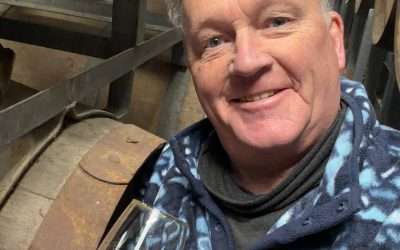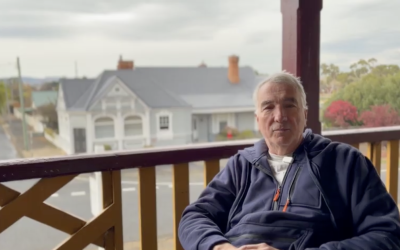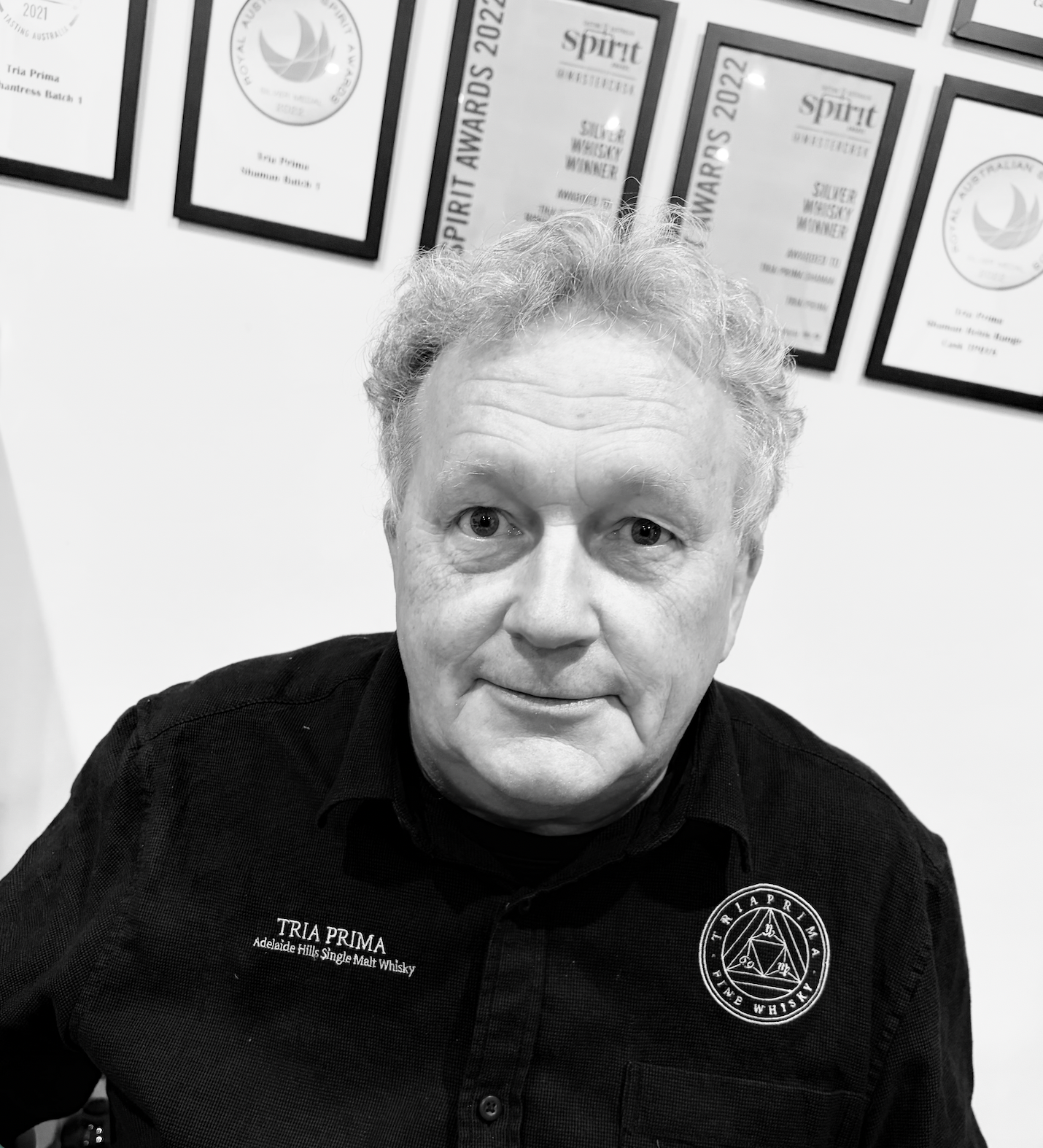
Everyone calls him Shandy.
And that is a good explanation of the Australian distillers’ community. Everyone knows everyone else. It’s a small community, a few hundred people at most in the whole country, and they all know each other, and for the most part, like each other. When I was planning my time in Australia for The Still Life Stories, I’d reached out to every distillery I could find, and each distiller who was interested in meeting would ask where else I was going. I’d tell them Tria Prima, and they’d all say, “Great place, you’ll like Shandy. Great guy…”
His real name is Paul Shand, and he’s originally from Scotland. He moved to Australia 20 years ago to work as a Geologist for a governmental agency. He’d spent his life in science and had traveled the world studying rocks, water, and their interactions. He ended up in Adelaide and eventually left rocks and water to make whisky.
Another of those “I’m tired of this. I want to make whisky,” defectors to the casks. He was fascinated by the idea of turning lead into gold and the ways of the wizards of old. Chasing the Philosophers’ Stone and the practices of the ancient alchemists. He named his distillery Tria Prima, the three primes of alchemy. Sulfur, salt, and mercury. It was believed that if you prepared these correctly, you could create the Philosopher’s Stone, which could turn base metals into gold.
He’s doing that now, in a sense. Turning water, barley, and yeast from water into liquid gold, fine whisky.
He has named all his bottlings after ancient and sometimes mythological spirits, and the packaging, paintings of goddesses and wizards, carry the theme throughout.
I’ve written before about the alchemy of making spirits, and Paul.. Shandy… is a prime example of this.
He’d spent much of his life as a scientist in the study of rocks and the earth, and now he takes the reigns of the alchemists of the Middle Ages to turn barley into something quite mysterious. He embraces the magic that happens when the new-make whisky goes into various kinds of casks to metamorphose, like so many fuzzy caterpillars, into butterflies.
I’ve enjoyed many of his magic elixirs. Single malt whiskies aged in red wine casks, or champagne casks, or American Bourbon casks. Each takes on a new character as they age and are put into bottles at their peak.
“Do you miss being a geologist?” I asked him.
“I’ll always be a geologist,” he replied. “One can’t pass a cut for a highway without seeing the geology of the newly exposed rock, but I do love making whisky.”
Fair enough. I’ve always wished I were a geologist and knew why all the rock formations I see are what they are. As it is now, every time I see rock formations, I wonder how they got there and what they were, yearning for answers I’ll rarely ever find.
And one must think that a scientific background is a benefit to a whisky distiller. Knowing how something will work in the distilling process is great, but knowing WHY is even better.
But there are still mysteries to unfold.
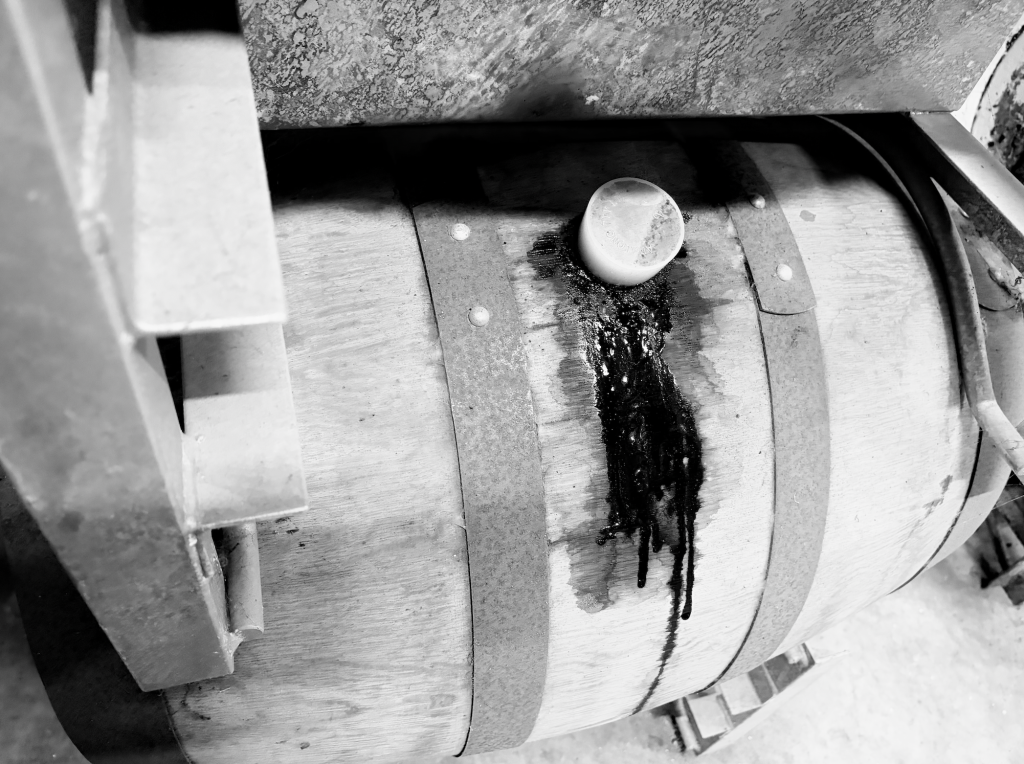
How can one know when a cask is at its peak and should be bottled? There is no exact science for that. It’s just a lot of hard work, experience, and experimentation.
“You have to keep sampling the casks and hope to catch one at its peak.”
It’s a little like opening fortune cookies. Which one will be the winning lottery number, because from the outside, they all look alike.
Tria Prima is truly a one-man operation.
Paul does everything from running the mash, the still, driving the forklift, and bottling, all by himself. It’s a lot of physical work, casks are heavy, and it’s a lot of mental work…
“It’s Tuesday morning… What really needs to be done today?”
Does one reorganize something or try 20 different casks to see which should be bottled this week?
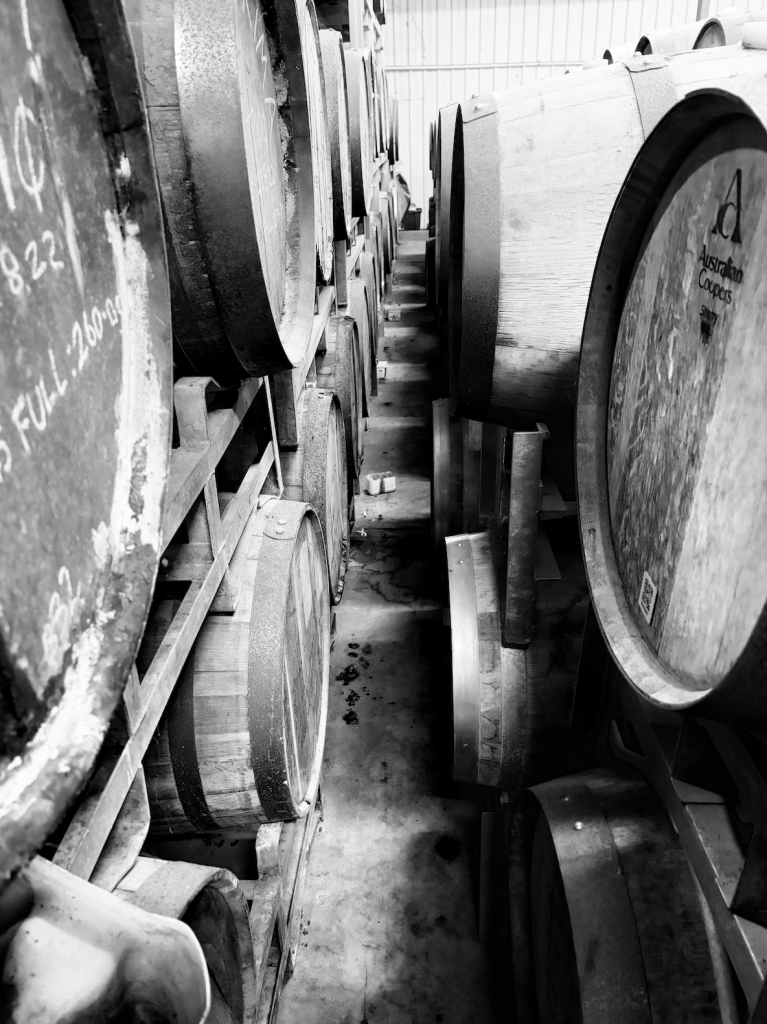
And how do you pick which 20 casks? There are around 150 casks of single malt, plus more of other varieties in the back.
I got to thinking, when will one of the giant companies have an automated tasting system that will test each cask for flavor parameters and then light up when a cask is ready to bottle? Paul and I, a marketing guy and a scientist, sat around and talked about this and assumed it could be built and utilized at some point. I’m sure a giant company will deploy the Whisky Master 2000 and have little pop-up flags on the casks that go off at 3 AM, popping up a little blinking light and a buzzer just like the damned smoke detectors down the hall when you’re dead asleep. It might save a round error in accounting, but will the world notice the absence of the whisky wizards and alchemists at the center of this industry?
Until then, guys like Paul will take care of the casks and babysit them to maturity, and when they feel they’ve hit their peak, they’ll gently put them into bottles and watch them be sent out to be the center of great conversations around the world.
This whisky world is full of wizards and alchemists who understand the magic of turning grassy plants into bottles of brown, spicy liquid that help us tell better stories, or make our mediocre stories SOUND better. And I’m thankful for these folks. Can their skill ever be AI’d into an algorithm? I hope not. The subtle differences of human-centered distilling make life more interesting, and if life isn’t interesting, why bother getting up in the morning?
Even if some general tells the only way to be successful is to get up and make your bed every day. Does he understand the difference between good and boring whisky? He’d probably be the first to deploy the Whisky Master 2000, and then where would we be?
I will continue to maintain that we’d be better off with more whisky wizards and fewer generals deploying whisky bots.