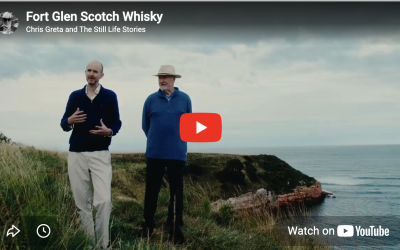
I’ve spent a week at Fort Glen Whisky in Duns, Scotland and I’ve tasted history.
Peter Bower and his son, Matt, are Michelin-grade chefs who can take basic ingredients and create something new and delicious, and those ingredients could well have an amazing history. Ancient oak barrels of long-ago Scotch Whisky that might have been sealed in oak when the Berlin Wall was still standing.
It may be amazing, but somehow, Peter and Matt will envision making it better with a sherry cask for a few years, or some peated malt or grain.
Or sometimes it’ll be perfect, and when it hits its peak, it goes into a bottle and into a prized collection.
They have a bit of a vault of rare and valuable spirits, and I’ve had the grand fortune to sample some of these.
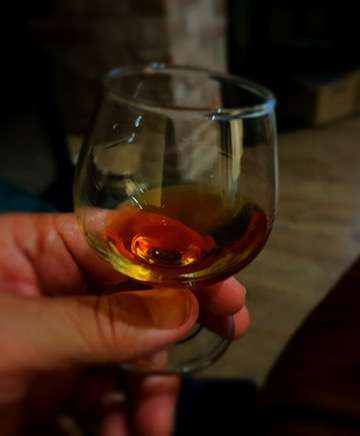
That’s the case with a glass of Resistance Cognac.
When WWII was tearing the world apart, wine, champagne, and cognac-loving Nazis decided they would have their way with the great estates of France. The Nazis appointed special agents who knew wine, champagne, and cognac, the Weinführers, to control the French production. They basically stole, plundered, and pillaged everything they could.
This did not go over well with the French.
They quietly bricked over cellars, even finding garden spiders to put around freshly sealed walls to make them look old. They mislabeled wine, hid it wherever they could, and many winemakers joined The Resistance. There are many stories about estate owners using ancient wine caves to store weapons.
There are also stories of Weinführers who understood what was happening and turned a blind eye, loving the wine and winemakers just a bit more than their bosses. There is even a story of one such man who hated Goring so much that he substituted his order of Château Mouton Rothschild with a much inferior wine in the Rothschild bottles.
There is little left from that time, but every so often, a bottle of cognac comes up for auction that had been hidden away in a sealed cellar since those dark times.
And I had a glass.
And, yes, it was astounding.
Yes, the flavor and the way it just melted away when you took a sip was forever memorable, but even more important was knowing that you’re getting to savor something that was so important that someone risked their life to hide it away from evil, and to let it continue to age gracefully long after the oppressors were defeated.
It’s not often in one’s lifetime that an average kinda guy gets to experience that. And when you do, it’s an obligation to try to paint a picture of just what it was like.
We’ve been talking about finding music that fits a particular spirit and some are very difficult, but this is easy. It popped right into my head at the first sip.
La Vie En Rose by Edith Piaf. And not one of the thousands of modern versions. A scratchy recording from the 1930s.
It’s equal parts strength, love, tragedy, and joy, and breaks your heart every time you hear it.
That sip of Resistance Cognac did that. A powerful taste of a powerful symbol that will someday be gone forever.
Taste the past if you ever get a chance. It’s far more than a simple flavor.