Let’s assume you’re in a room in a building.
Maybe it’s a fantastic room and it has windows and a comfy chair and snacks, but what happens if you get curious about the building? You go outside and turn around to see where you’ve been, and in turn see the stunning architecture.
I feel that way about Tasmania.
I’ve been here a little over two weeks, living at a distillery at the southern tip of Tasmania. As a writer-in-residence, my job is to go around the world and stay at distilleries for weeks at a time and write about the people and places and stories I find, because distilleries are a reflection of the culture, the land and the atmosphere.
And whisky is just cool, even if you don’t care for it that much. A real, distilled whisky tells the story of where it came from, even after sleeping in oak for decades, if you’re willing to listen.
So I’ve spent a lot of time of the Northern Hemisphere and for some reason, I felt the genuine need to go to Tasmania. I really don’t have a good explanation; it just was. So, I came.
And for a guy who grew up in California and eventually wandered to Texas, Tasmania has to be the most foreign place I’ve ever seen. I see hints of other places here. Pigweed, which in LA is known as ice plant, and the powers that be planted it on freeway embankments decades ago. It grows easily and never dies, even with a million cars driving by every day, ice plant/pigweed flourishes. Eucalyptus trees. We got ’em in California because someone thought they’d make a good cash crop, and they didn’t, so now they’re everywhere, and we don’t call the gum trees.
But pretty much everything else in Tasmania is utterly foreign to me, so I wanted to see the place from a different perspective.
And I wanted to see dolerite.
That’s a rock.
One of the amazing things I discovered during my stay at McHenry Distillery is that all their whisky, beer, and gin is made from the water that freely flows from one spring, halfway up Mt. Arthur. That water flows through a sandstone layer under a massive mountain full of dolerite columns.
I did some research, and it turns out that dolerite is a bit of a magic lodestone for making whisky. Minerals in the vertical channels of the very hard stone help the fermentation process.
Yeast spa.
And it makes the water taste great.
On land, most of the dolerite is underground, supporting great mountains and forests, so the best way to see the great dolerite cliffs on the southern coast is by boat.
But I don’t own a boat.
Tasman Island Cruises does.
Locally, they’re called The Yellow Boats. All the locals on The Peninsula told me it’s fabulous. And it’s not like one of those “tourist” things the locals pass every day but never indulge in. They’ve all gone, multiple times, because it’s genuinely inspiring.
So I booked a Tuesday morning tour.
A Three-Hour Tour.
I don’t know if a professor, a millionaire, or a Hollywood star was on the boat, but it was three hours.
And what a three hours.
It was all very well organized. Meet at their office in Port Arthur, just a few minutes away from the historic site and the McHenry Distillery.
All checked in, go next door and get breakfast and coffee at the shop, pick up a big red waterproof parka, get on a nicely appointed bus, and ride with my other adventurers twenty minutes past cliffs and beaches and forests to the docks. There, we all got on the boats.
And great boats.
I know nada about boats, so I’ll wander through a description.
From the side, the roof reminded me of The Monkees Mobile.
Go look that up if you never watched The Monkees.
It had maybe 30 or 40 seats with seatbelts.
The seatbelts told me we’re going to go fast.
But from the side, the thing looked like a giant, high-speed, aggressively haunched river raft. Inside, it was sturdy as a tank and comfortable. Everyone had a seat, a seatbelt, and a view of the whole universe.
Captain Tom (really his name, good thing he wasn’t a Major) was great. He’d done this many times before. He made a lot of jokes and had to remind everyone to put their phones down and listen to the safety briefing like a man who’s had to manage boxes of hungry puppies. We left the harbor at Eaglehawk Neck and before long, we were looking back at Tasmania.
The first stop is known as (didn’t catch it) Tasman Arch and it’s dramatic. A long, flat shelf of sedimentary rock and huge arches, open sea caves with crystal-clear water, roaming in and out. The boat got ever so close to going inside the cathedral-sized arch, the back, a hundred meters in, open to the sky with trees in view. It’s hard to fathom how many thousands, or millions of patient years it took to create this masterpiece.
And that was the first stop.
Tasmania truly is full of drama. From Port Arthur, you can drive 30 kilometers, and the scenery and weather change dramatically. You go from dense forest to open rangeland, rolling hills, and sunnier, drier weather. But down here on The Peninsula, it’s drama all the way, and the greatest drama is from the sea.
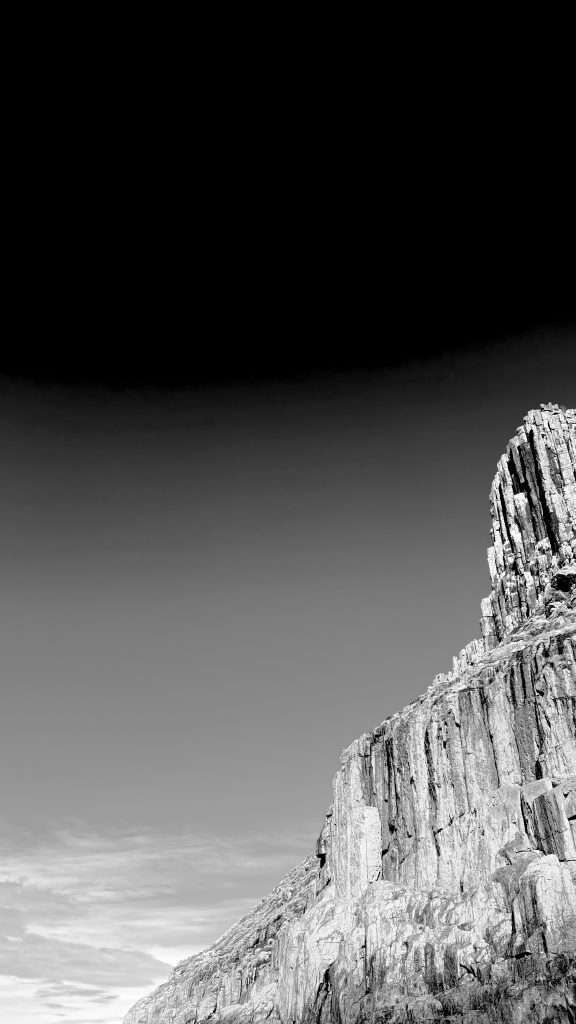
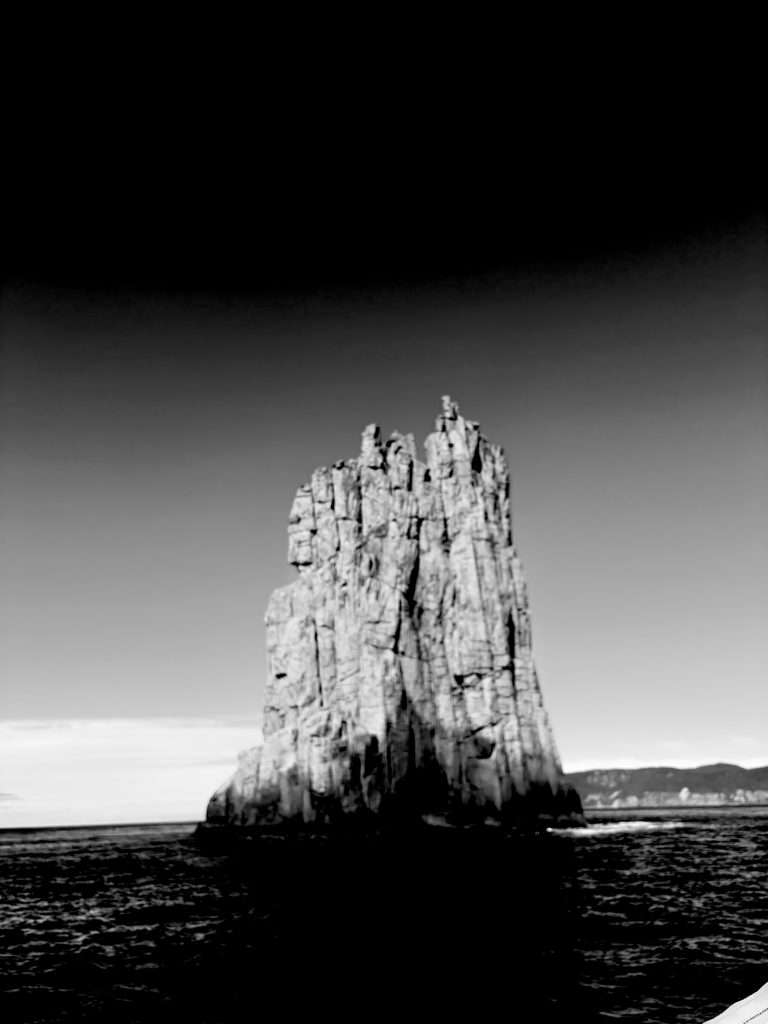
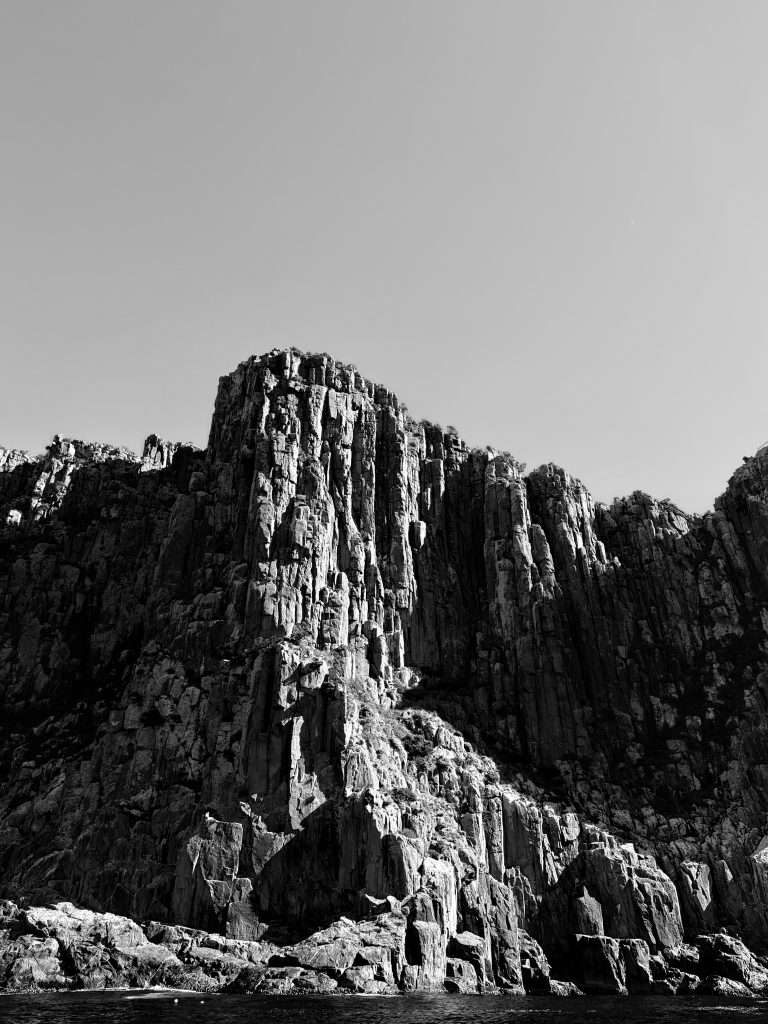
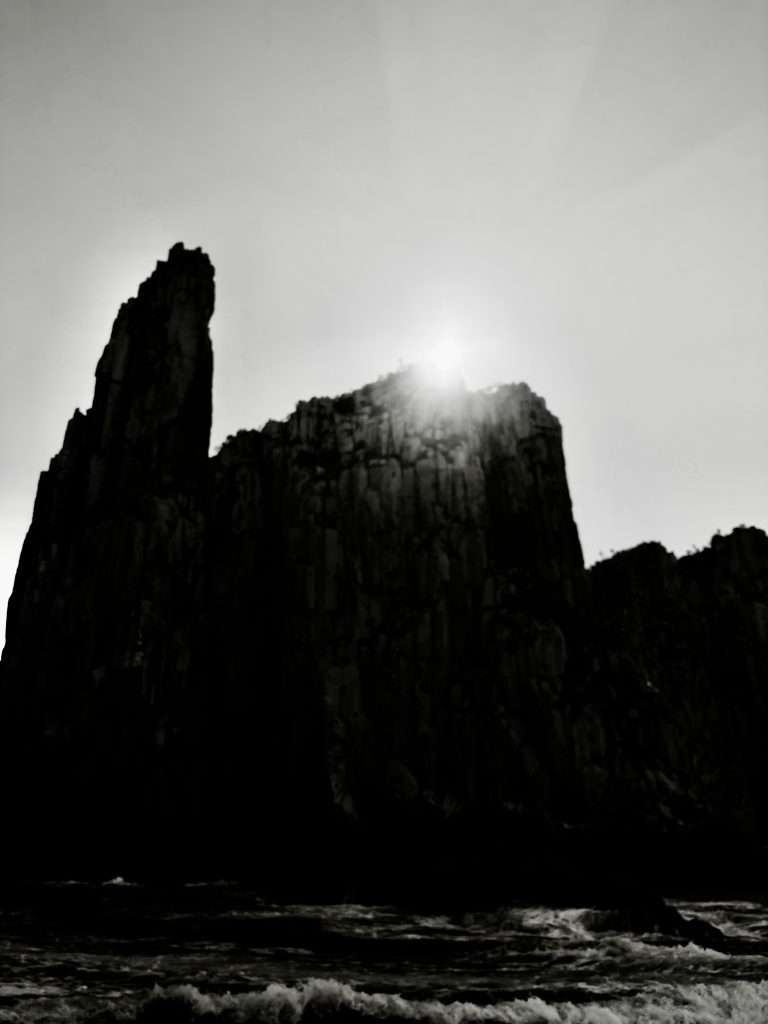
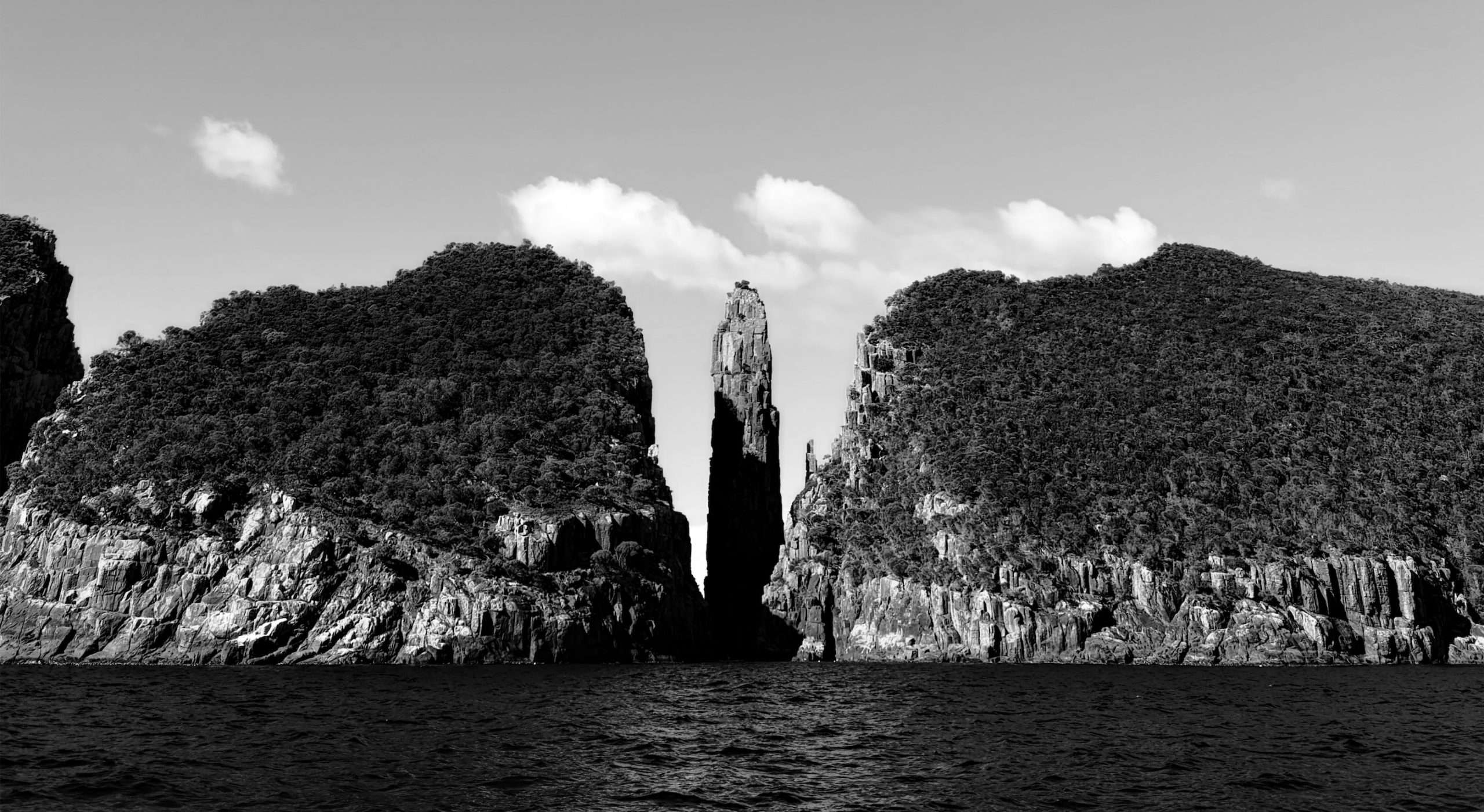
The layers of softer, sedimentary rock cliffs, sea crashing against rocks at the bottom with fat, happy seals lounging in the sun, eventually give way to that rock. The dolerite. The massive columns, the flying buttresses of nature, jut straight out of the sea as high as 300 meters. Long, thin fingers of rock defy gravity and nature itself to reach heights most rock could only dream of.
That’s the great thing about very hard rock. It goes big on drama without just crumbling. The faces of the rock look, and it seems silly to say this, like the fake rock at Disneyland. Random surface textures and fissures that some set builder studied as the perfect weathered rock surface to replicate on the Raiders of The Raiders of The Lost Ark ride.
Except this is the real thing.
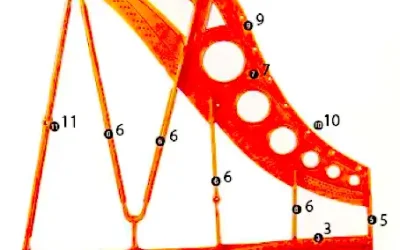
Every stop had different sights. The captain would slow down and explain what we were seeing: a waterfall, the utterly improbable loading ramp, and a nearly vertical pulley for the lighthouse. The mind reels at the structure clinging to the side of the rock that was a staging area for bringing materials up the mountain to the lighthouse and the unimaginable structure itself, and the stories of the lighthouse keepers who lived up there, towering over the Tasman Sea.
And the seventeen children that were born up there over its habitation.
Many of the stops were populated by those fat, happy, and very lazy seals. Or flocks of birds. We cruised along with the albatross, which can fly for a year without ever landing. And we passed through great balls of fry fish, escaping predators below, seals or tuna, only to be faced by the gulls, scooping up breakfast.
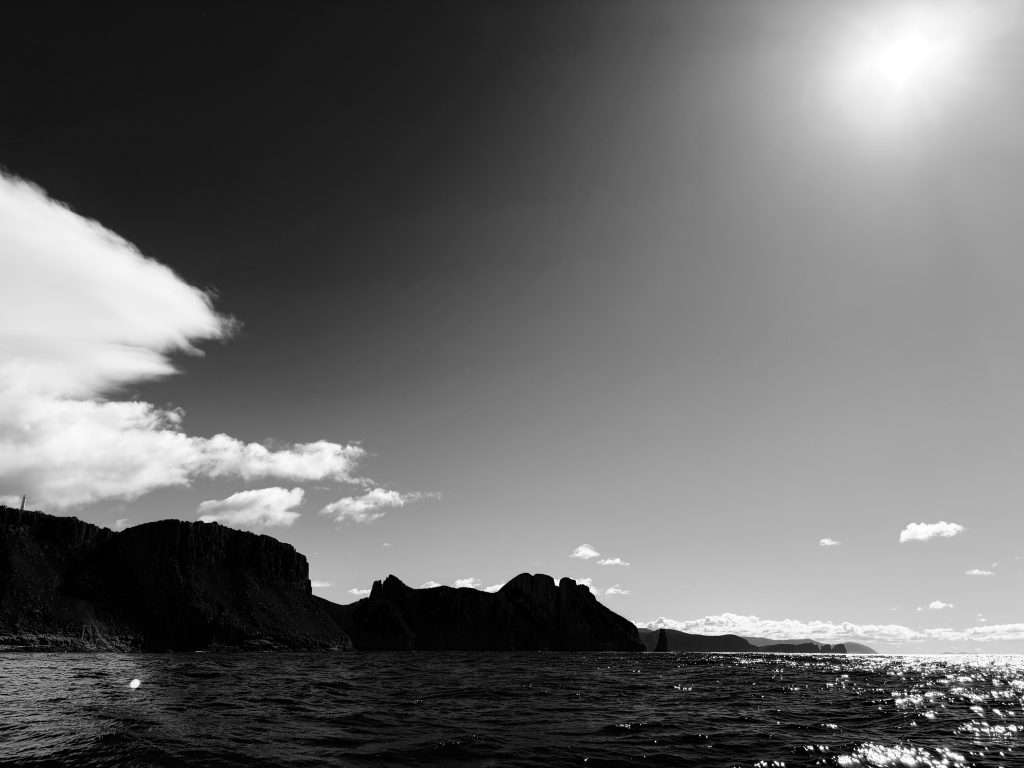
Two hours, heading as far as the lighthouse, then out to sea so one could really grasp the majesty of the massive rock with the lighthouse perched on top.
Then we headed back. Everyone on the boat seemed exhausted from so much grandeur.
We all had the huge, red waterproof ponchos, but honestly, nobody got wet.
The weather was perfect, sunny blue skies, so no rain, and most of the boat is totally covered by that Monkees Mobile roofline. And the very design of the boat kept people dry. The bow and keel design allowed it to plow through swells easily and comfortably. The captain knows the seas well and took us through an area where he knew we’d have some big swells, enough for a few thrill rides, almost weightless ooohs and ahhhs, but just enough for fun.
Even if you’ve never been on a boat before, you’d love this.
So now I see why the people who live here go out on the tours, and not just tourists. It’s worth it. To really understand something, you sometimes have to go outside and really see. There are multiple tours, going to different parts of the Tasmanian coastline and I’d do them all. I’ve seen a lot of coastlines, but I think Tasmania is the most inspiring.
Tasman Island Cruises is operated by the family-owned business, Pennicott Wilderness Journeys. They operate Tasman Island Cruises, Cape Raoul Cruises, Bruny Island Cruises, Wineglass Bay Cruises, Freycinet Aqua Express, Iron Pot Cruises, Tasmanian Seafood Seduction, and Bruny Island Traveler.