I came to Scotland with some preconceived notions of how Scotch whisky came into being. I assumed they were all in big, ancient castle-like buildings on windswept cliffs or islands, and while that can be true, it’s not the rule.
There are distillers that operate on a huge scale with well-engineered efficiencies. Massive industrial estates that boggle the mind.
There are distillers that operate on a much smaller scale in scenic places in ancient stone buildings on windswept cliffs and islands, and sheep in the fields, and all that.
And there are the blenders that might not have sexy buildings or operate on massive scales, but quietly work their magic in places that don’t have gift shops. Fort Glen Whisky is one of those.
It would be awesome if they were perched on a hillside overlooking a green, verdant valley with sheep frolicking and ancient stone walls and mist and heather and bagpipes and haggis cooking on the wood stove and all that.
But no.
They’re in a giant warehouse on the outskirts of a little village called Duns with a few pubs and a Chinese takeout and an Indian curry place that’s closed now because it was lost in a card game.
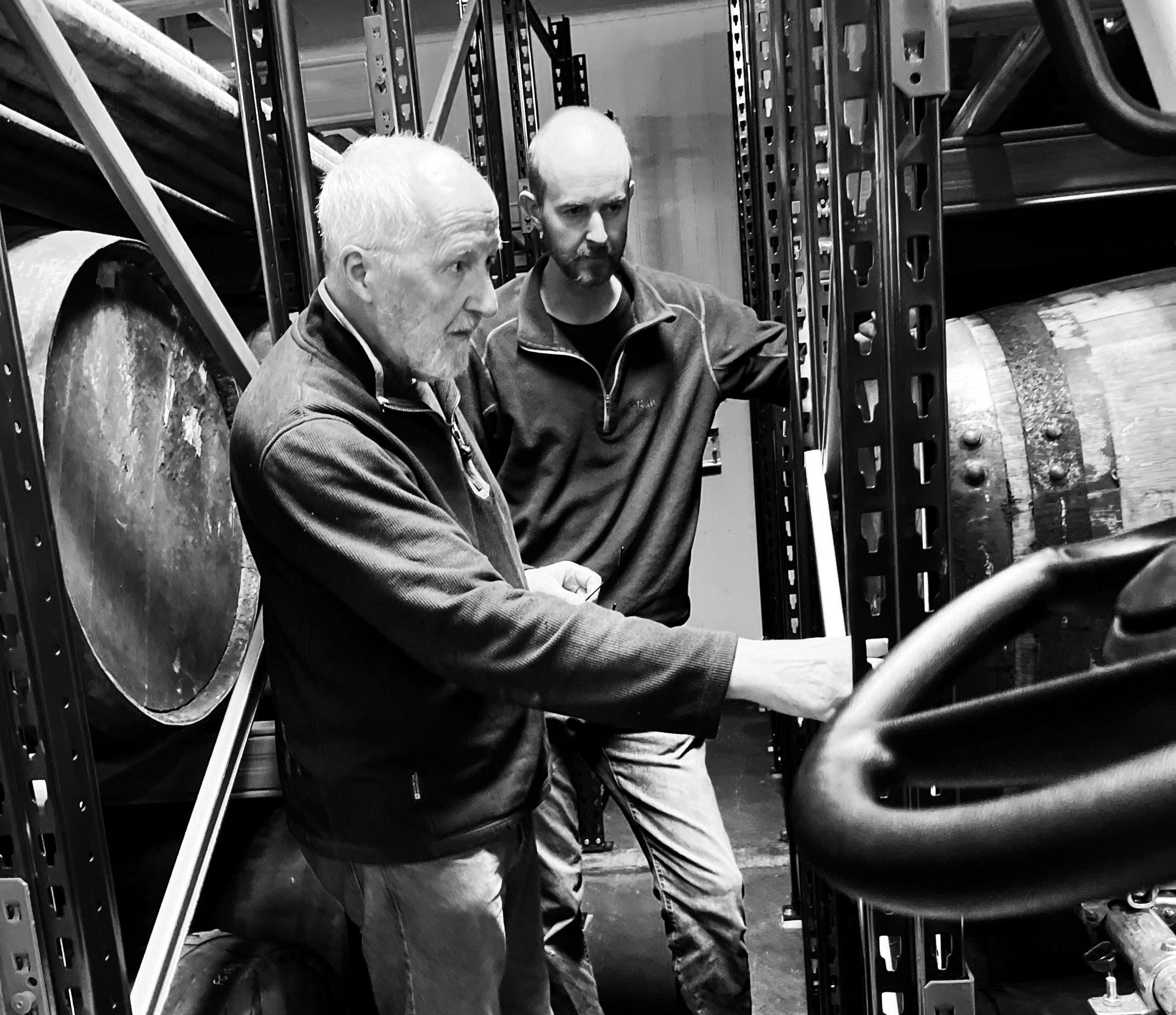
But Fort Glen is in a big building with racks and racks and racks of ancient, sleeping oak barrels and a shiny, electric forklift.
Not very sexy or iconic at first.
But as you walk through the warehouse, and I hate that word so I banished it.
I, instead, call it The Keep. As. In Castle Keep. Which, according to The Interwebs, is “the innermost, strongest, and most prominent tower within a castle, serving as a final refuge and a symbol of power.”
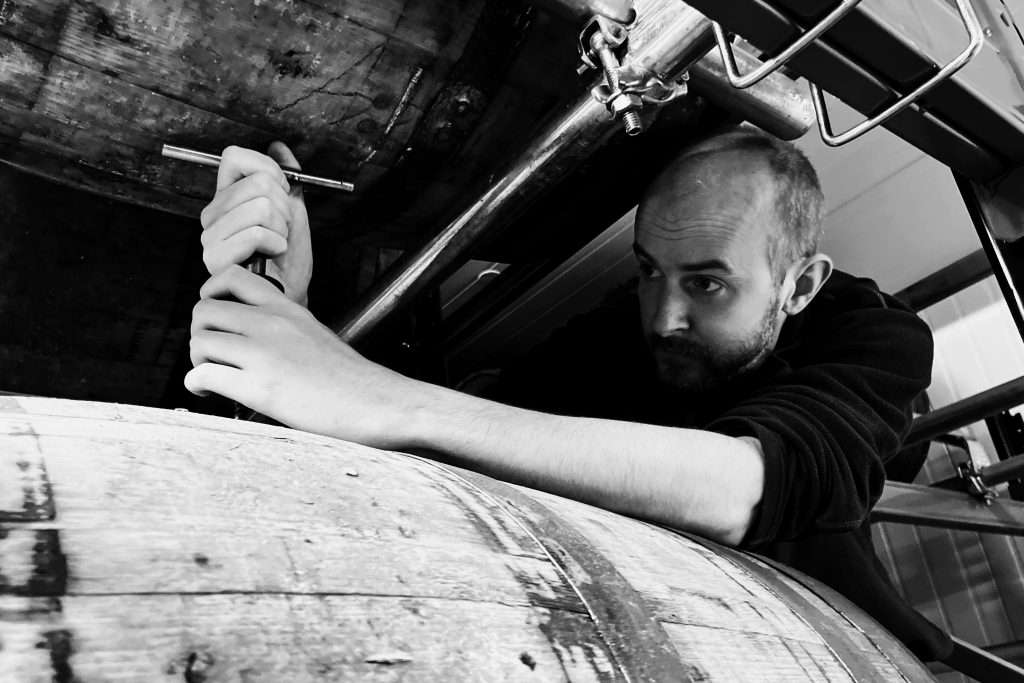
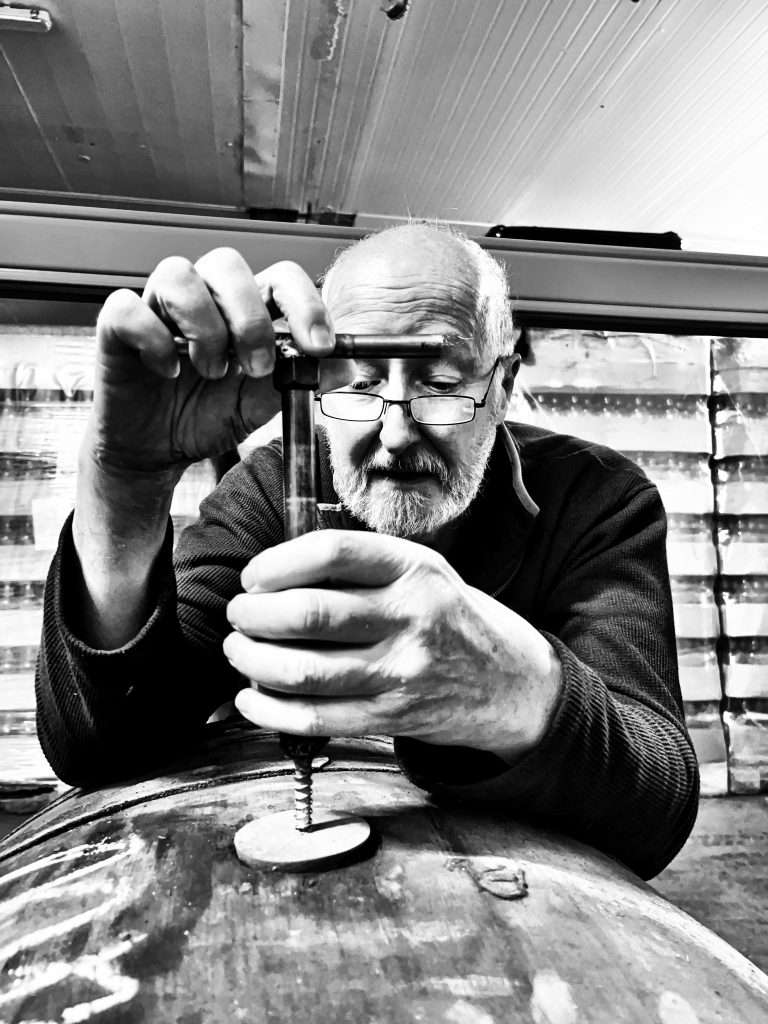
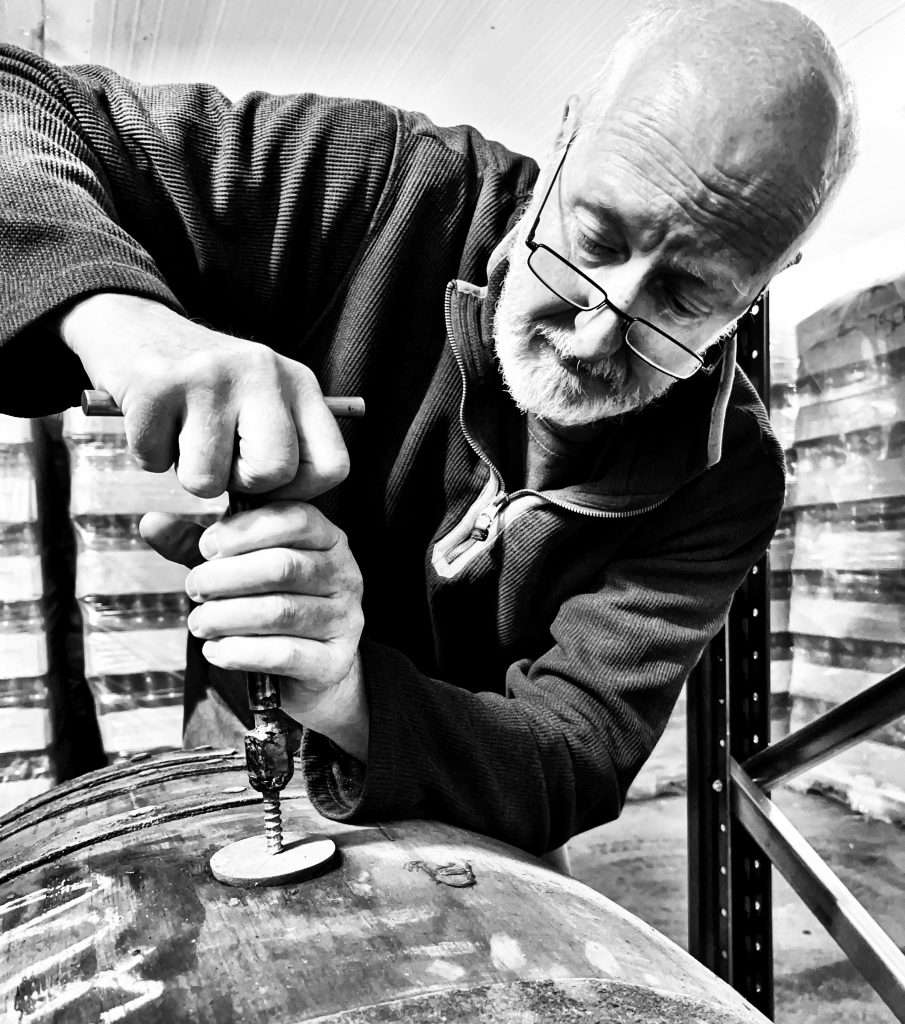
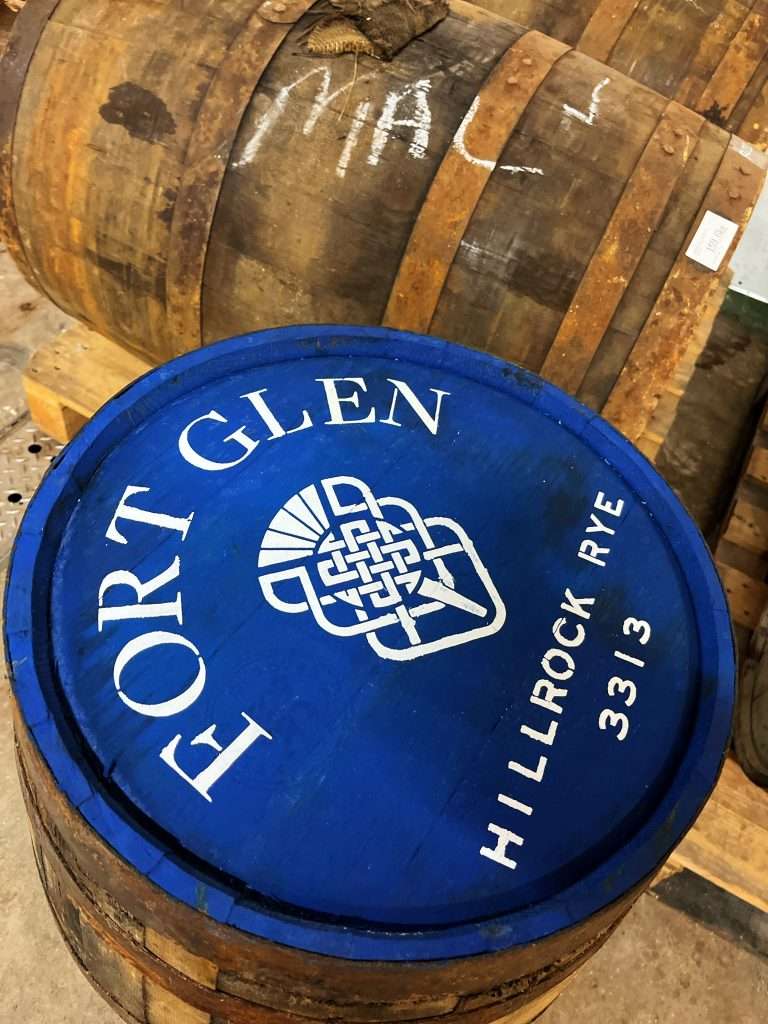
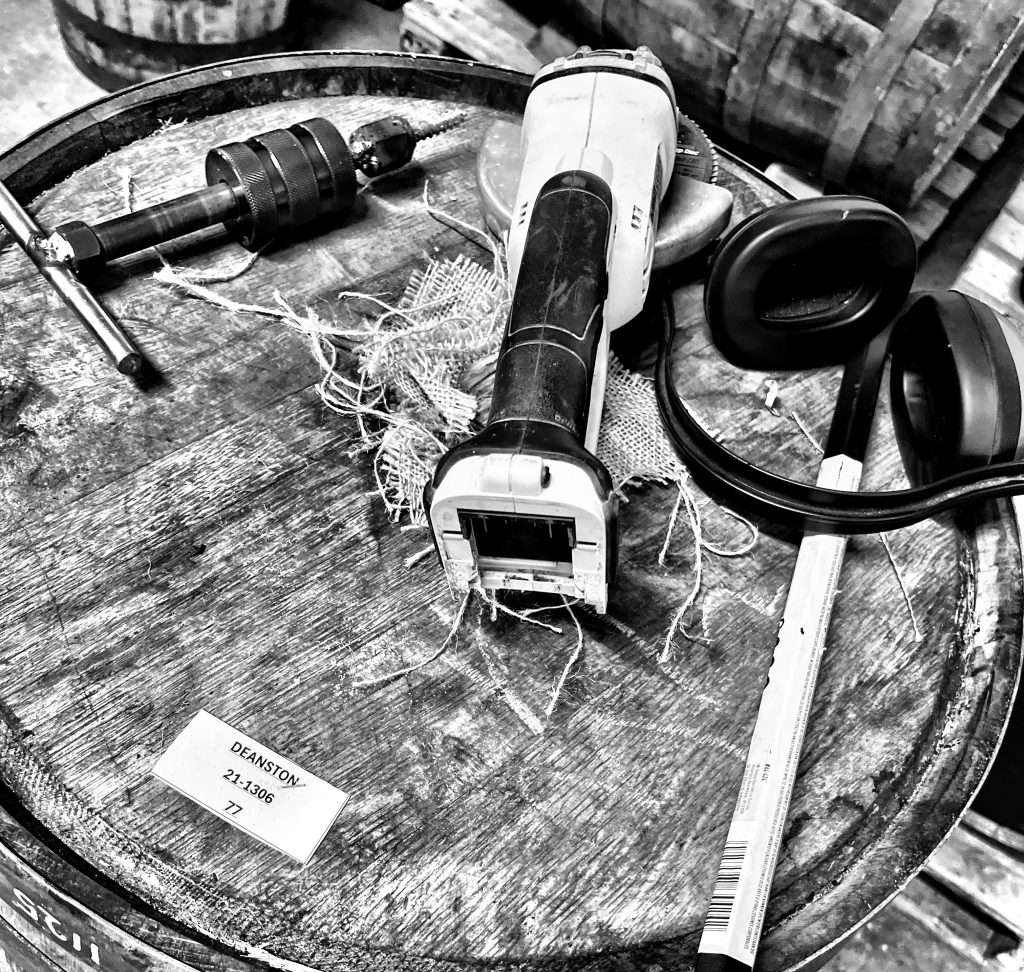
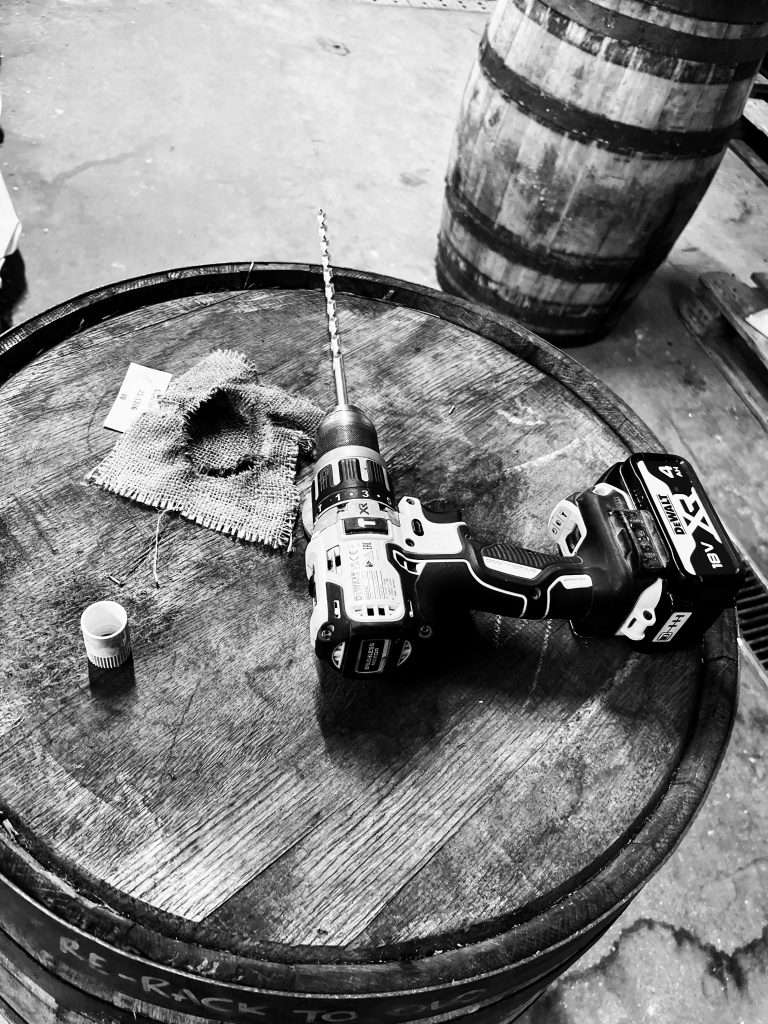
The Keep is very efficient and well-planned and organized, with all the casks being numbered and stored on their sides with some space above them. We got in 60 casks last week, and they’ve all been stored on racks with the bungs on top and room to get to them.
The reason is that we may need to get to them.
In a giant distillery, they store the casks sitting upright on their ends with the bung on top, and they’re stacked on pallets, six up.
Imagine the weight on those bottom casks.
They do that because they won’t be going anywhere for a few years. They may inspect them for leaks every so often, but those casks are just going to sit while the charred oak does its passive magic, giving flavor, letting some things escape as the wood breathes and turning it from water and alcohol to real whisky.
But at a place like Fort Glen, those casks of aging whisky will take on a new life and get improved over and over.
It’s called recasking.
And it’s a lot of damned work.
Basically, Peter and Matt might taste a batch of casks and think about what it needs. Just like you might taste some soup and think it needs some oregano, salt, and thyme.
So they’ll move the casks around and use gravity to move the 53 gallons of whisky from one cask to the one below, or drain the casks into a huge non-interactive container on a forklift and put all that whisky into different casks. And they might mix it up with another batch from a different distillery. Maybe they’ll have casks from a distillery that closed its doors years ago and will never happen again, and they’ll mix it with a whisky from the other side of Scotland.
It’s a bit of Merlin turning lead into gold, with genuine danger. Whisky is heavy.
So some whisky makers aren’t in sexy, iconic, and ancient stone castles, but they make up for it by quietly making really great whisky.
My goal in creating The Still Life Stories was to find some of these hidden gems and tell their stories. When I first heard back from Peter Bowyer, he apologized that Fort Glen Whisky wasn’t in some sort of ancient castle.
“It’s just a warehouse in a small village, it’s not very sexy, but we’re making some really great whiskies,” Peter told me the first time we spoke.
Hell, I’m in. Let’s see this.
A valuable lesson for me. Having spent my life in the ad biz, I’ve seen what perceptions can do for or against a brand.
As an American, I envisioned great Scotch coming from that imaginary castle, and plenty do, but there are other birthplaces of great whiskies.
A nondescript warehouse on the outskirts of a small village in the south of Scotland, with a couple of mad scientists who can imagine flavors that don’t exist yet but know how to get there.
If I need castles and windswept plains and frolicking sheep, there are plenty around the but for some great whisky magic, I can hang around The Keep.