We call it The Archangel’s Share after Michael, the Archangel. He is, apparently, El Jefe Grande, and we’d assume he wants more from us so we’re happy to give.
For anyone who knows about whisky, they know about The Angel’s Share. That’s the portion of the aging whisky that seeps out through the oak and floats up to the heavens.
To Michael.
Walk into an aging house full of whisky casks, and you smell it.
That heavenly, delicate scent of happy whisky, happily working its way through an inch of oak and wafting out into the world, one molecule at a time, free at last.
It’s the scent of maturing. Of transformation. Of becoming. Caterpillars and butterflies and such.
It’s what gives old whisky that amazing aroma and taste. It’s distilling that which has been distilled, purifying it in oak. There are a hundred variables in The Angels’ Share, but it always leaves you with less whisky than when you started, and most whisky makers try to minimize it to around 1% a year.
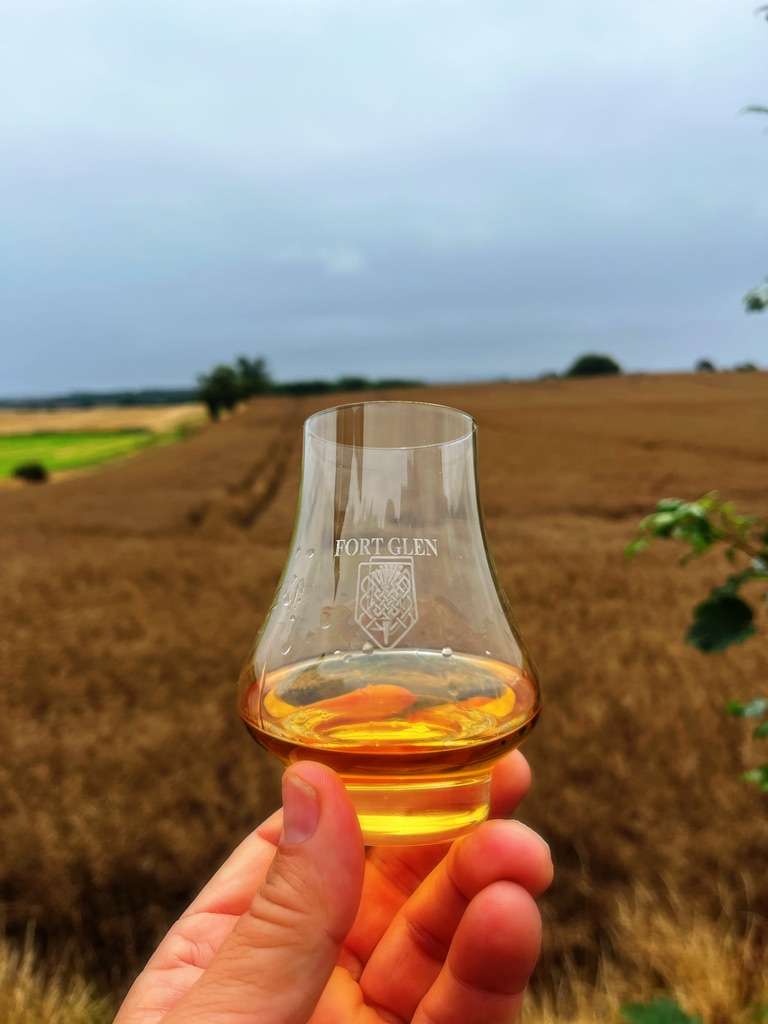
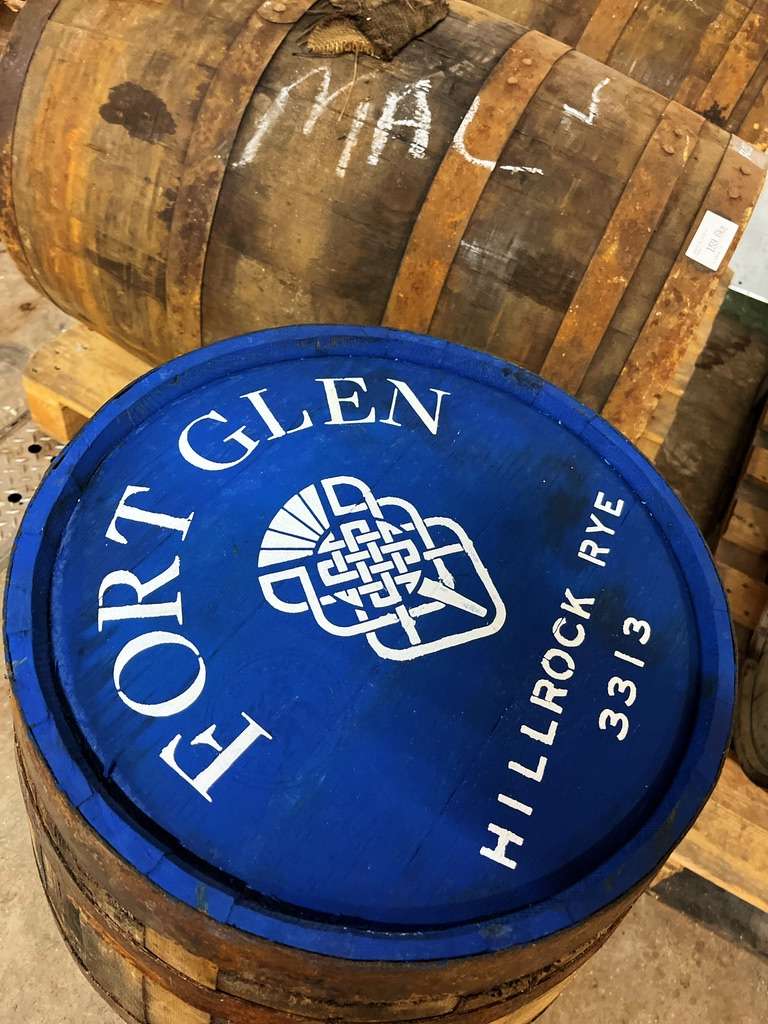
The guys at Fort Glen Whisky are losing around 5%.
Whoa, you say.
FIVEPERCENT?
Yes. Five Percent.
And they don’t mind. Their unique maturation process is a lot of damned work, but in the end, they’re making such unique and rare whiskies that they figure it’s worth the trouble.
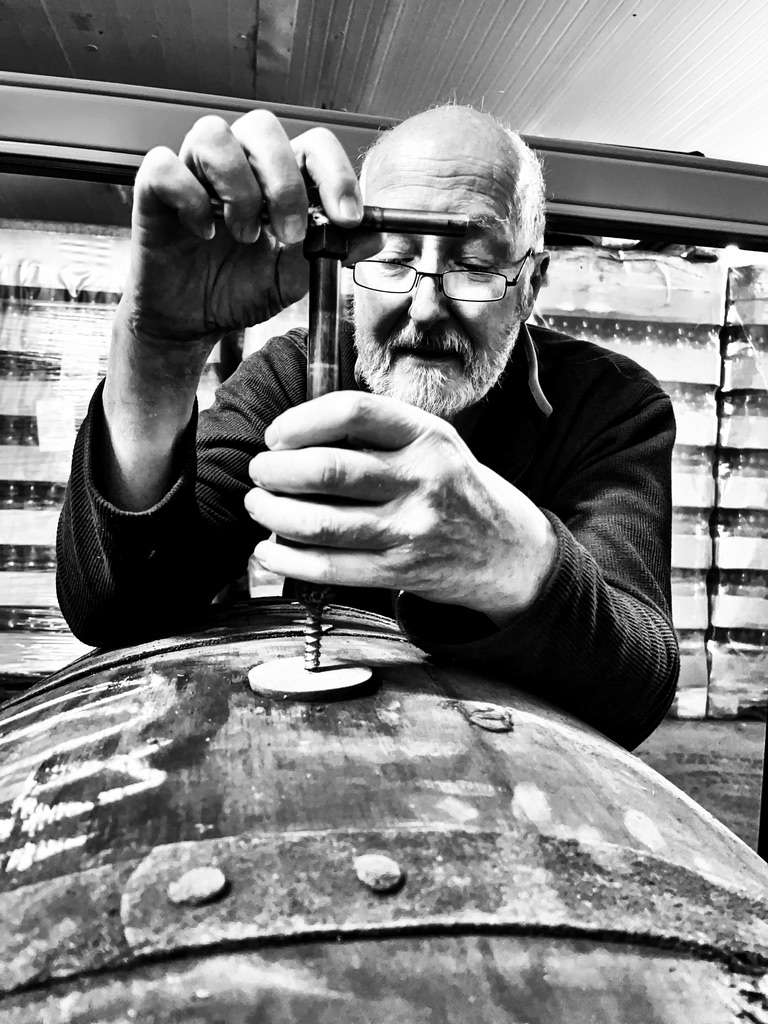
It means always tasting the casks.
Moving the casks.
Moving whisky from this cask to that cask and not filling it up to the top.
It means that the effort put in this week might not be appreciated for another five years. Or longer.
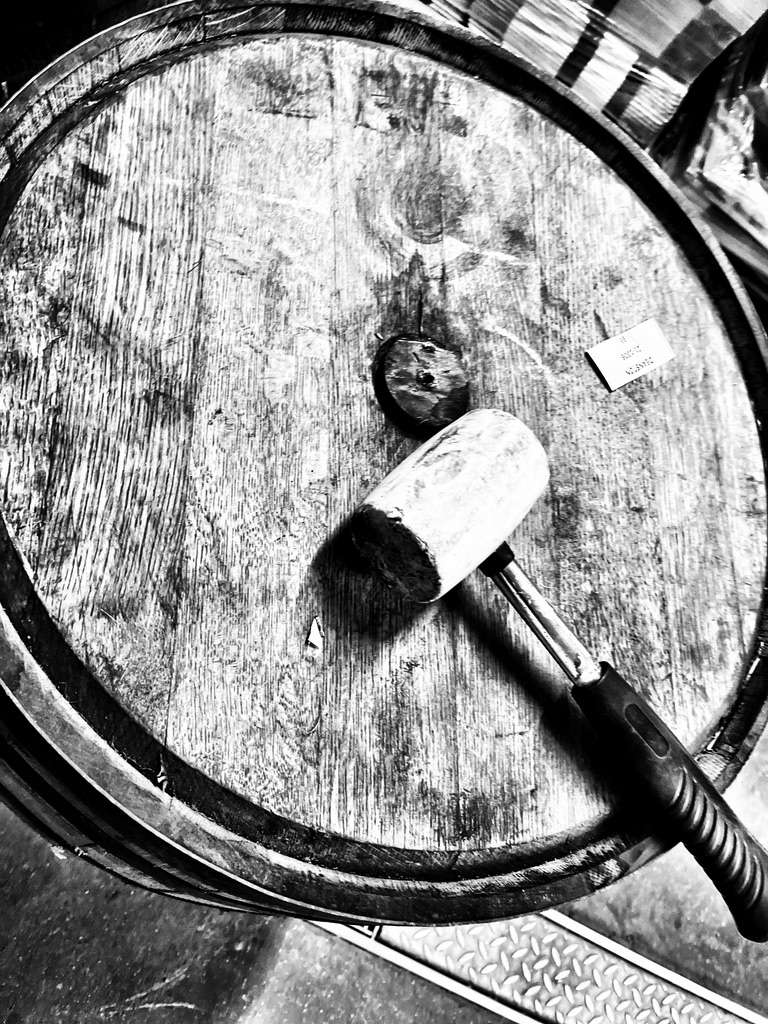
They even designed a special vented plug that allows a small, but exact amount of evaporation. Pairing this with their lower cask filling philosophy means they will lose more whisky, but the whisky is well worth it.
They even designed their aging warehouse, and they hate the word warehouse, so they call it The Keep, with mobility in mind.
All the racking is designed for a specific model of forklift so they can get to the top racks to pick up casks and move them when needed. They created a unique gravity feed system to get whisky into lower casks when it’s time. Sherry casks for a finish? Move them under the bourbon casks and let gravity move the whisky to the lower level for a few years.
Imagine going to work and spending all week working hard to accomplish something that nobody will notice for five years.
But that’s what they do every day.
The Keep isn’t pretty.
It’s supremely functional.
As a writer looking for great stories about whisky, I had the typical cliché visions of great stone buildings on remote, windswept islands with sheep, sheeping on the glens and puffy clouds on the horizon.
But Peter Bowyer warned me that Fort Glen wasn’t like that at all.
It’s a nondescript warehouse in a beautiful but untouristed village called Duns.
“It’s rather boring really. It’s just a warehouse, but we’re doing some quite extraordinary things.”
Peter, the co-owner of Fort Glen Whisky, with his son Matt, is very good at understating things.
And I was good with that. I wanted to come to Scotland to explore how Scotch whisky comes to be, whatever it took. And for me, it’s been an enlightening experience. Not only are Peter and Matt gracious hosts and happy to share their experiences, but watching the process and understanding how they can visualize a flavor profile and tasting the results has been fascinating.
And, of course, Duns is a wonderful village. As I write, I’m in The Black Bull, enjoying a great cup of coffee and chatting with Paul, the owner. Fish and chips are on their way, and I’m looking forward to them. Fish and chips are always a great thing to look forward to while in a comfortable pub.
So being here has been a wonderful experience, and to watch first-hand as guys who know more about whisky than I ever will
But back to The Keep.
Some aging houses have lovely wood racks stacked on top of the lower casks, but what if you taste a cask that begs for a sherry finish?
Tear everything apart and move the whisky.
While it may look nice for the tourists, it’s not very useful.
Which is why a lot of the big whisky makers can’t be bothered and stack the casks to the stars.
The Fort Glen maturing methods result in significantly more evaporation, but also lead to a greater portion of the volatile compounds being directed elsewhere. Many of the molecules that might make a whisky taste harsh can escape.
Michael, the Archangel, doesn’t seem to mind.
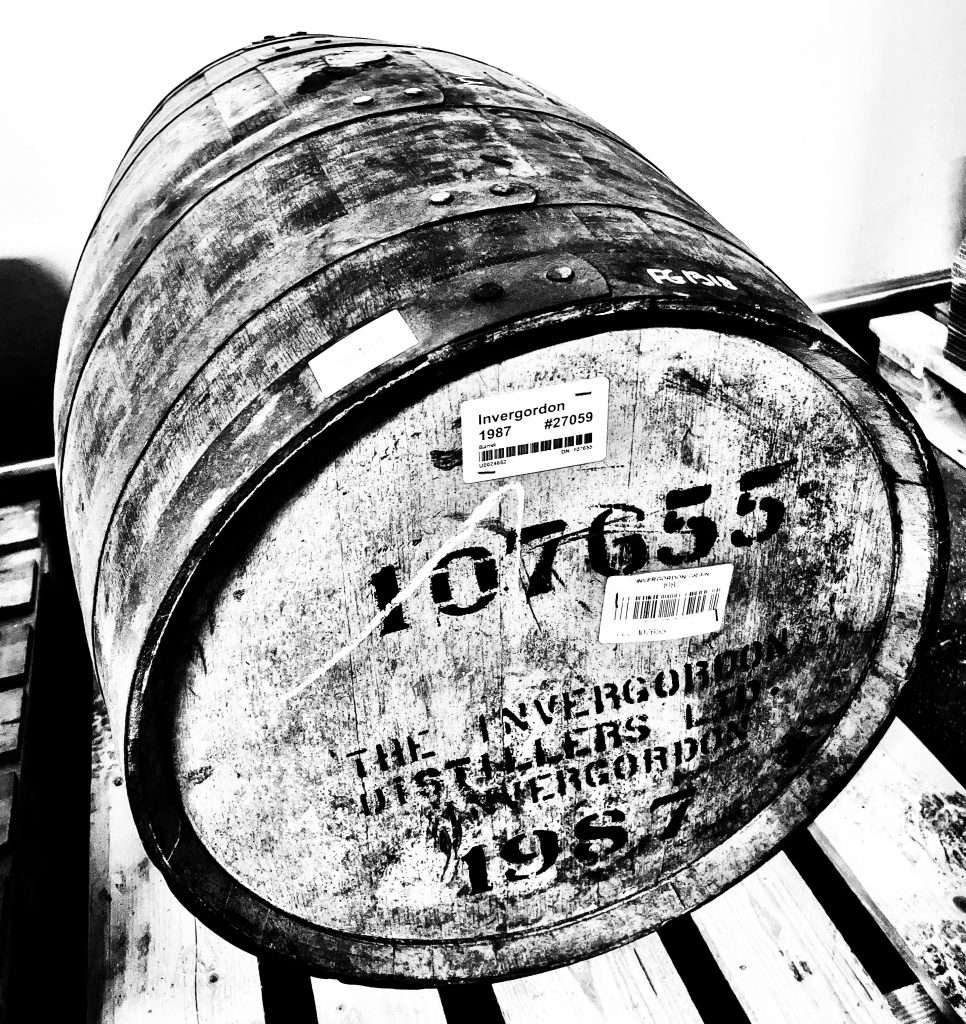
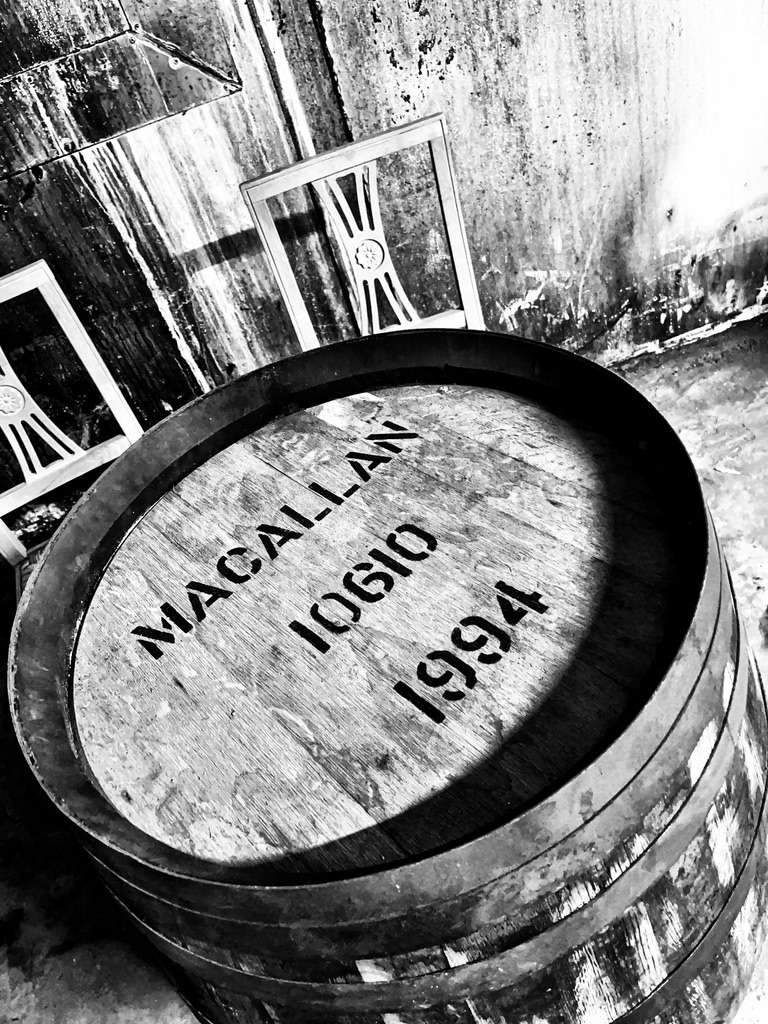
Ya see, the giant distilleries crank out massive amounts of whisky every day and pop it into oak casks, many with the bung on the flat end of the barrel, of which there are two. Then they drop these on pallets and store them six up.
And ignore them.
Because the bung (the hole where the whisky goes in and comes out) is on top, there could be thousands of pounds of whisky stacked to the ceiling, and nobody wants to bother to check on the casks on the bottom.
Then, after a few years, they toss it into a bottle and off you go.
It’s a shame.
But look at the whisky produced by The Big Guys as the paint and canvas. They make the raw ingredients that blenders like Fort Glen can use to create masterpieces.
A tube of paint is a lovely thing, but give it to Vincent van Gogh and something entirely new comes into view.
Those giant brands often produce fine whiskies, but the time and effort required to create something truly great seems to be off their radar. They let time work its magic, but don’t do a lot more.
They have giant ad budgets. So they don’t have to work that hard. Fort Glen Whisky is teeny, tiny, small, hard to find, and utterly unique. If you can find a bottle, possess it, and maybe pick up two.
The Archangel’s Share is worth enjoying. And sharing.