It’s the most dangerous creature in Tasmania.
You won’t hear it coming.
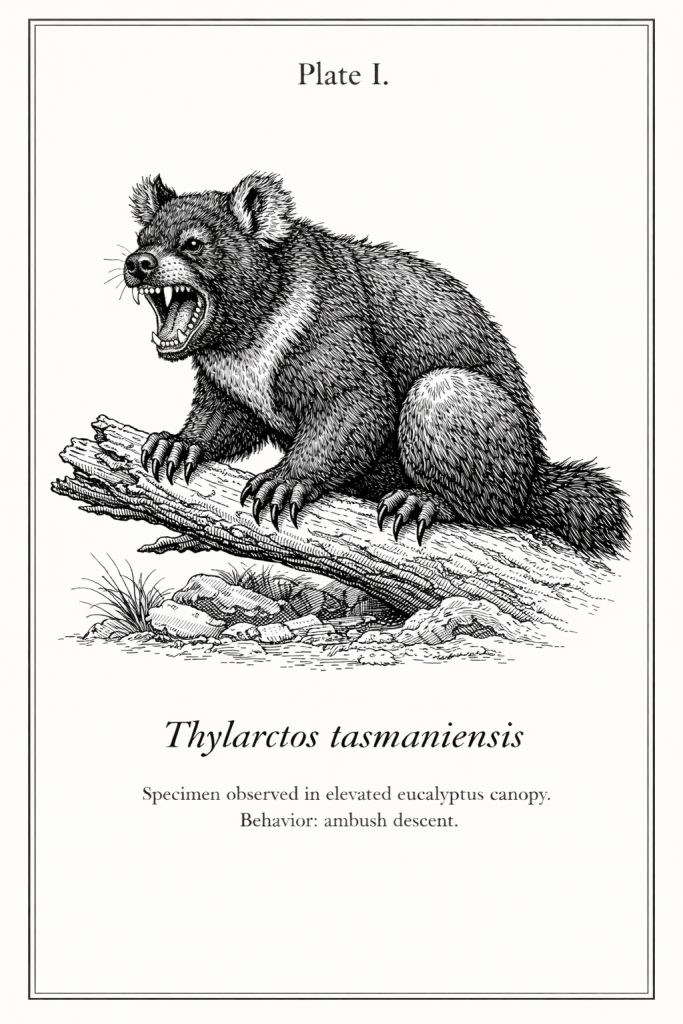
You’ll be walking through an old-growth forest in lush, green Tasmania, with giant eucalyptus trees, fifty meters overhead, when it hits you with a force and fury that can be utterly devastating, a force many don’t survive.
Often, it’s just an unfortunate wallaby or kangaroo or wombat, but when you are suddenly the victim, there is good reason to panic. It’s also why many who venture into the wild bush forests do so with an orange umbrella.
Not because it’s raining, but because of something far worse.
The Australian Drop Bear.
And here in Tasmania, an even more frightening menace, The Tassie Dropper.
So what the hell is an Australian Drop Bear?
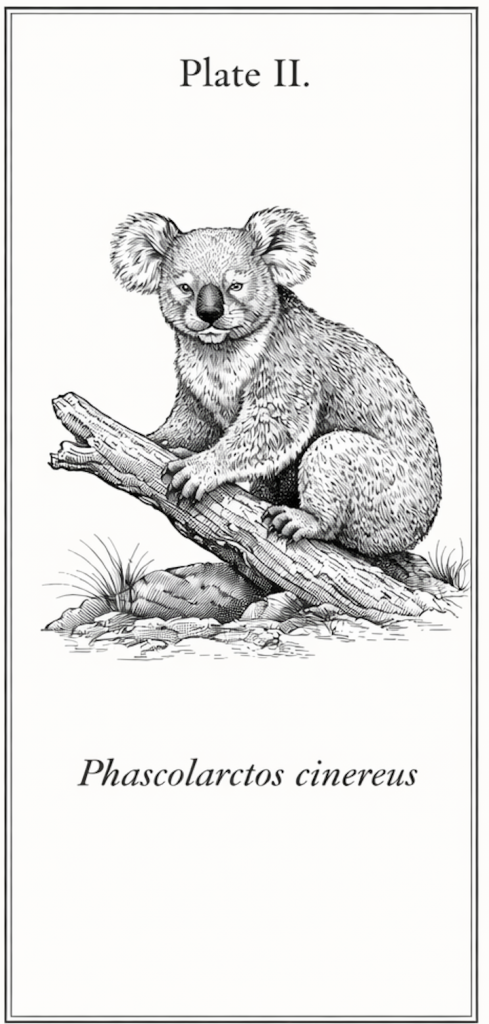
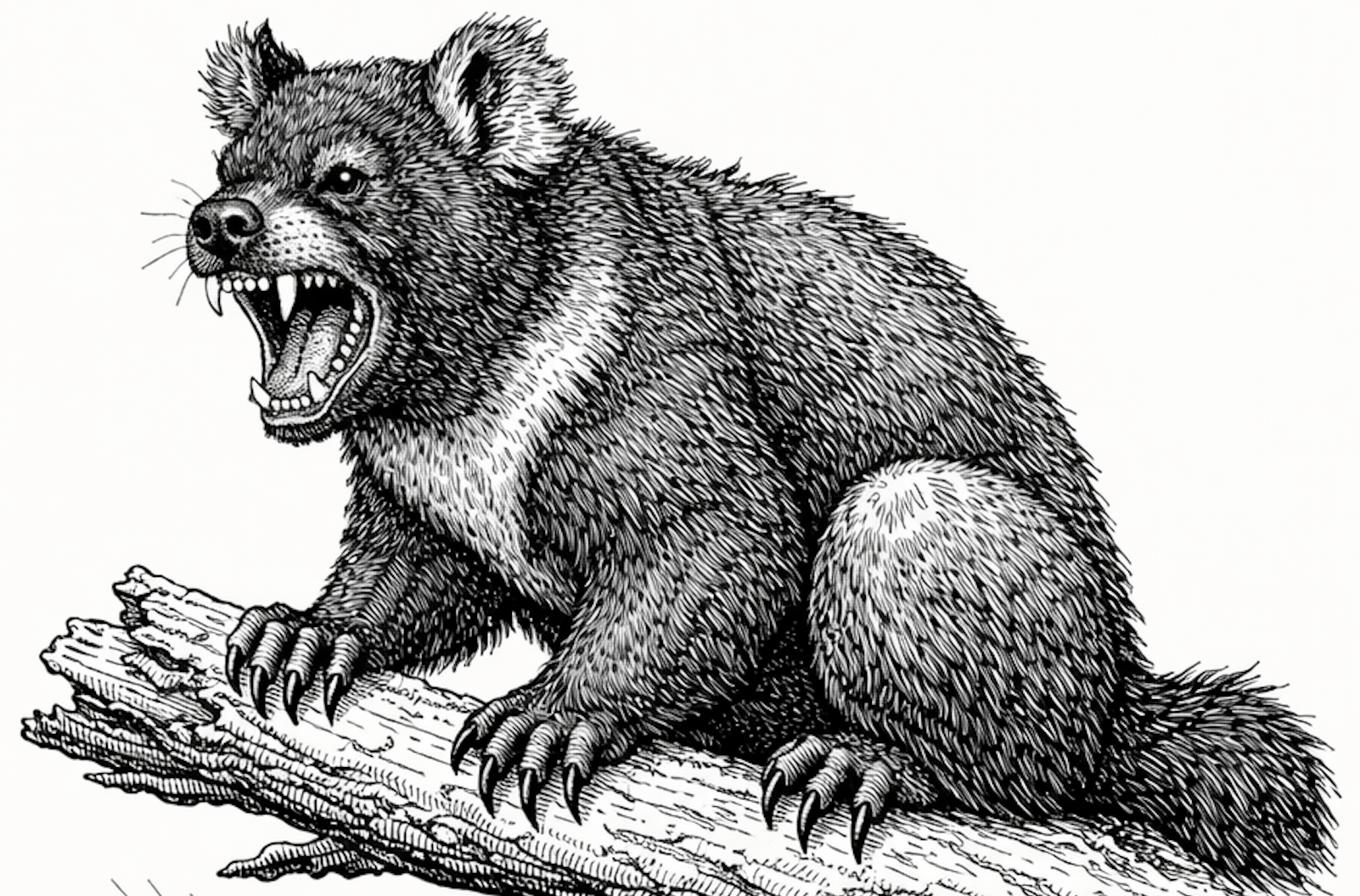
They’re rather like a simple, shy Koala Bear that lives quietly on eucalyptus leaves. Koalas look stoned, move slowly, and are harmless to everything but a eucalyptus leaf. And they’re painfully cute. But there is a cousin to Phascolarctos Cinerus that deserves respect. They’re larger with sharp claws and a lot of teeth. They blend into the treetops and are rarely seen, but the aftermath of their hunting forays can be found on forest floors all over Australia.
A few broken bones on the leaf litter, after the unfortunate creature is devoured. The scraps left for the Jack Jumper ants to clean up.
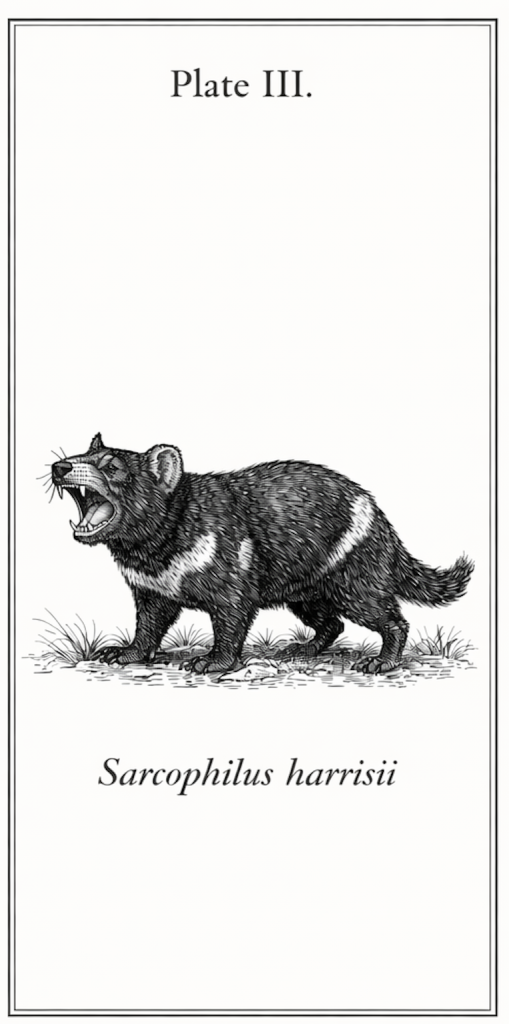
But here in Tasmania, ten million years of isolation have created a unique species. Millennia ago, Phascolarctos Cinereus bred with the ground-dwelling Tasmanian Devils, Sarcophilus harrisii.
Sarcophilus is somewhat akin to a badger, but meaner. They’re mostly nocturnal and seldom seen, and can live in the same forests as the Drop Bear, but seldom interact. However, a strange twist brought about this third species in Tasmania many millennia ago. Drop Bears have been observed with a frenzied behavior on the ground after feeding. It’s a bit of a blood lust. On the mainland of Australia, Drop Bears have been observed tearing up the ground, slashing tree bark,and destroying anything around them after making a kill. The fresh meal of flesh and blood of their victim simply puts them into a murderous frenzy. A form of temporary madness, similar to what has been observed in the Tasmanian Devil when it’s trapped.
Scientists believe that long ago, the frenzy attracted the violent Tasmanian Devil, and it became a violent mating ritual on the otherwise quiet island of Tasmania.
Hence, The Tassie Dropper.
Thylarctos Tasmaniensis is a menace.
In 2022, a Romanian tourist was with a group, taking an Easter morning picnic walk through a forest near Port Arthur, when a violent tragedy suddenly exploded. A Tassy Dropper launched from what is estimated to be 40 meters above onto the back of Josef Belginta, a 34-year-old teacher from Blaxoz, Romania.
“Josef was at the back of our group; there were maybe a dozen of us. He was carrying a backpack with food and some beer we’d bought from McHenry’s Distillery. We hear this horrible scream and turn around to see this creature tearing him apart. It was horrible. In seconds, his throat had been ripped out… We all panicked, and before we knew it, the creature had ripped big chunks from poor Josef. His backpack had ripped open, and the creature grabbed one of the beer cans before running off into the forest. In seconds, it was over, and poor Josef lay dead on the forest floor,” said Dominick Plystera.
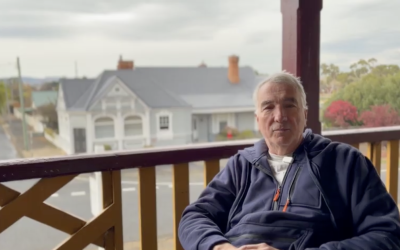
“We don’t see a lot of human attacks here; usually, it’s smaller and easier prey,” said Sgt. Johnny Flyte, an officer with the local Port Aurther police. “But once a year or so, the Tassy Dropper takes a human life. We send out hunting parties to the area, but we never find the buggers. They are quite elusive.”
The Tasmanian Tourist Bureau cautions tourists and locals from entering forests without proper protection. “For some reason, orange umbrellas seem to really deter the Droppers. Something about the color orange keeps them from attacking, and the umbrella changes the profile, making people look much bigger,” said a spokesperson, who asked not to be named.
Tasmania is a wonderful place with beautiful natural landscapes, abundant wildlife, fine distilleries, and a rich history, but beware the Tassy Dropper and bring an orange umbrella if you venture into the woods. Most local stores on the island carry the ever-present “Dropper Stopper” umbrellas, and locals will all have one in the car. “
They keep the rain off your head, too,” shared a local.