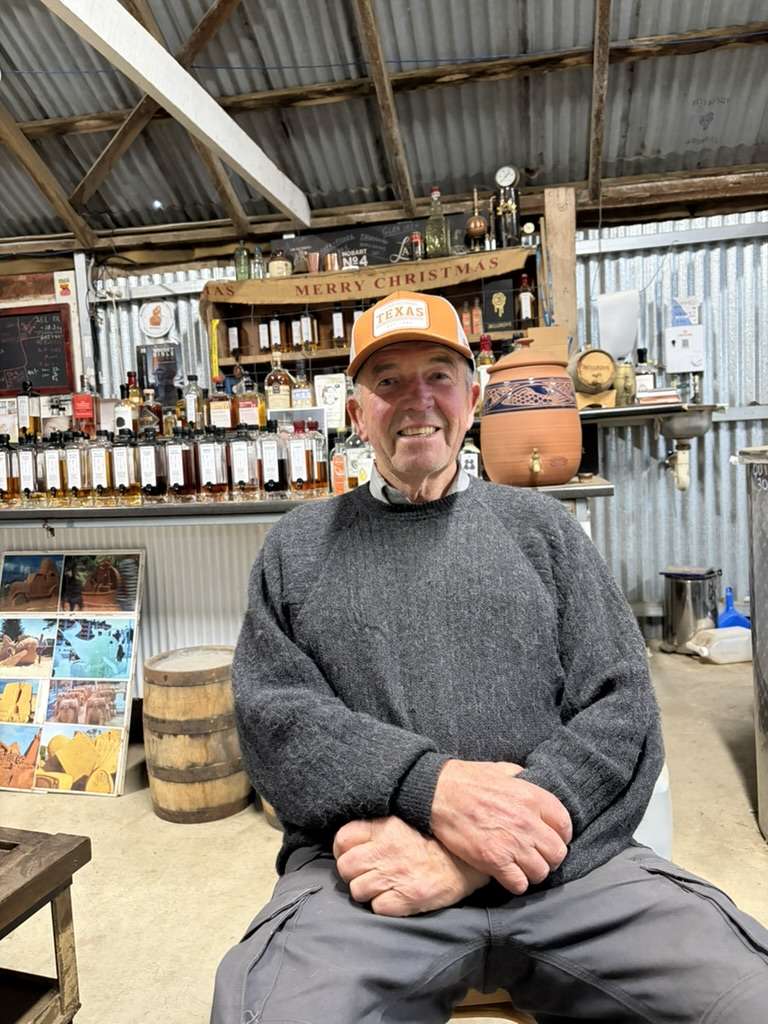
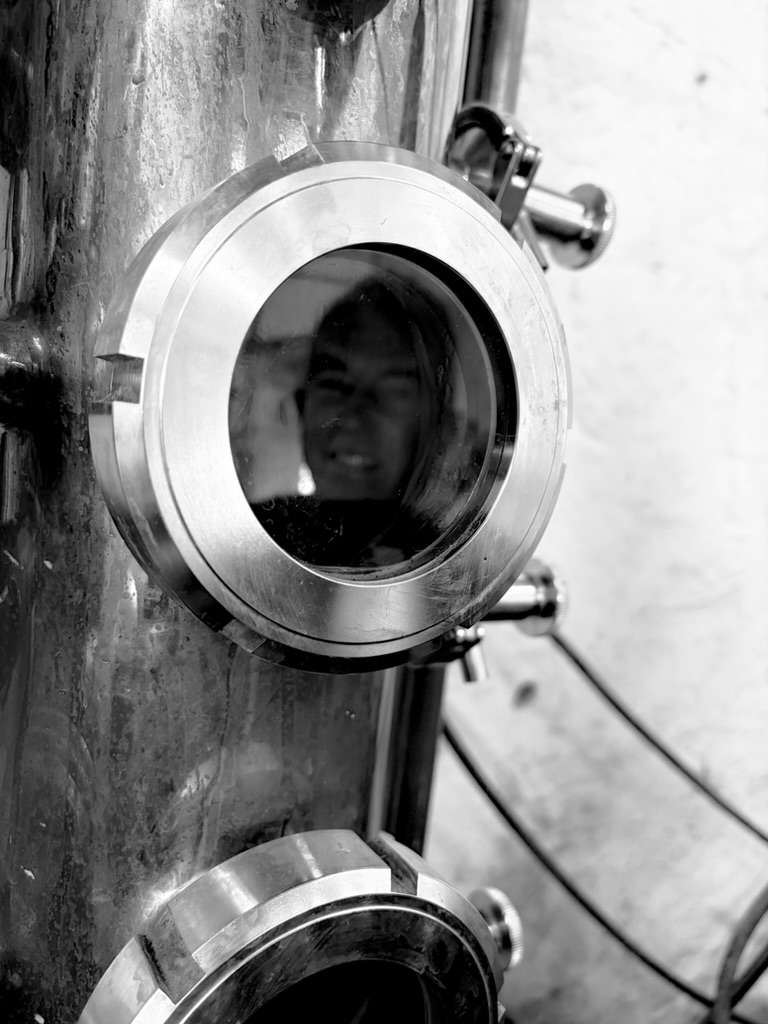
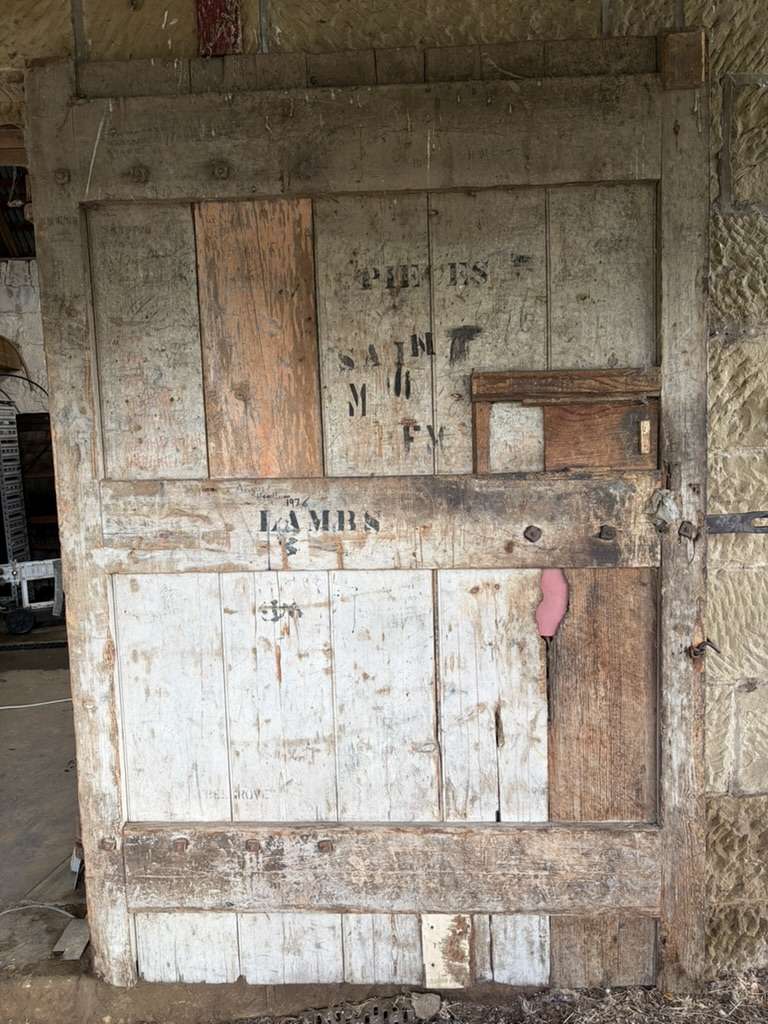
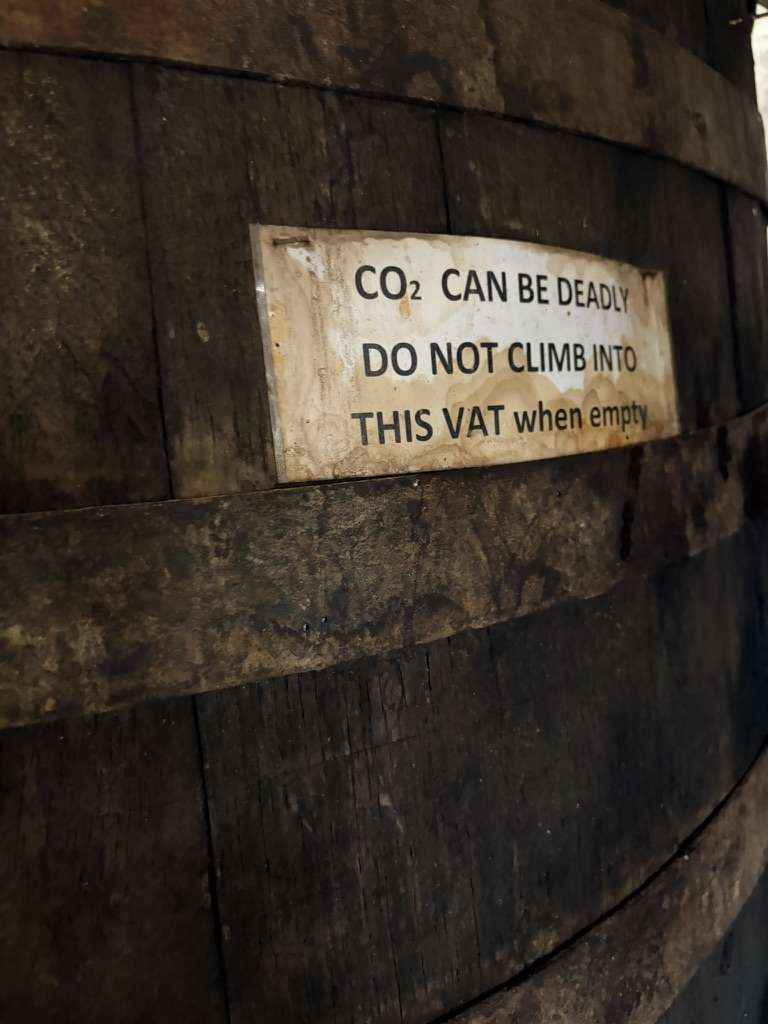
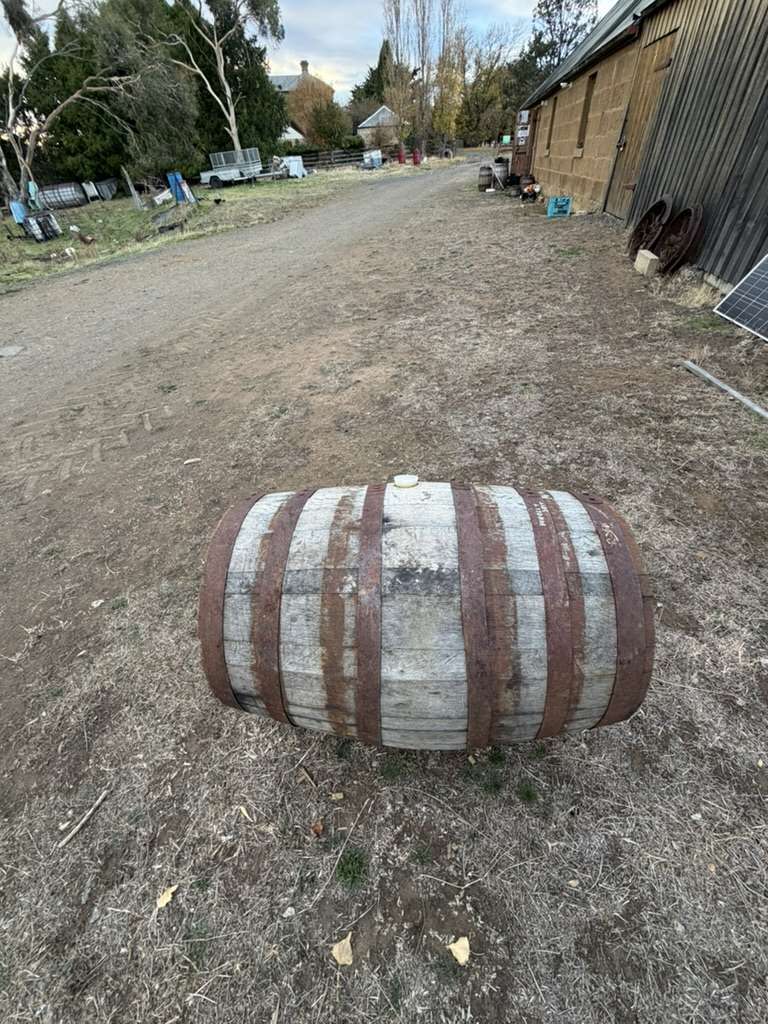
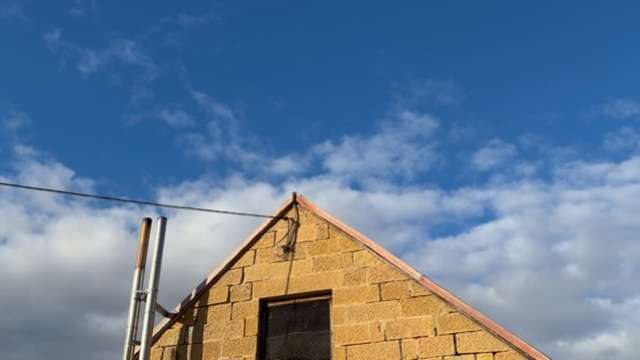
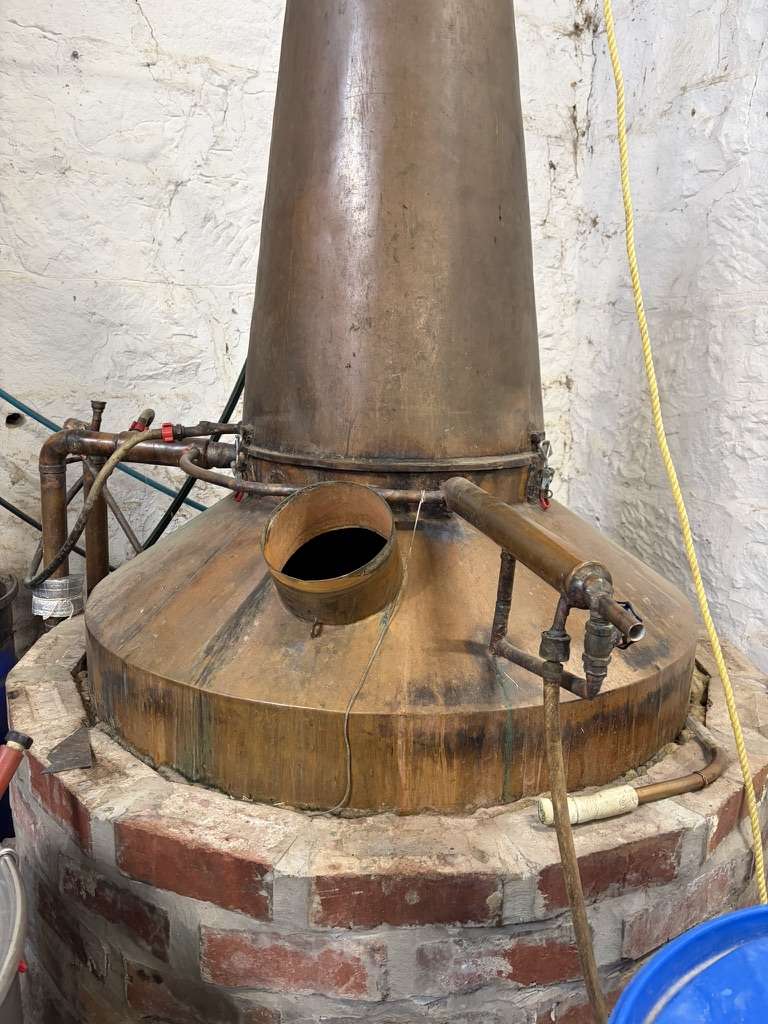
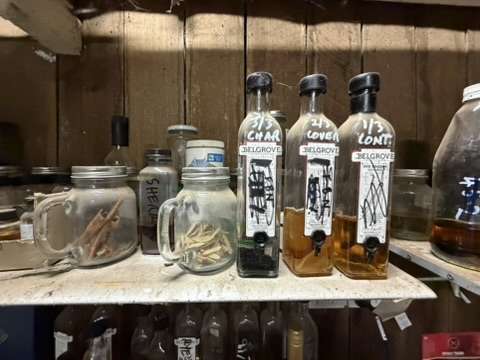
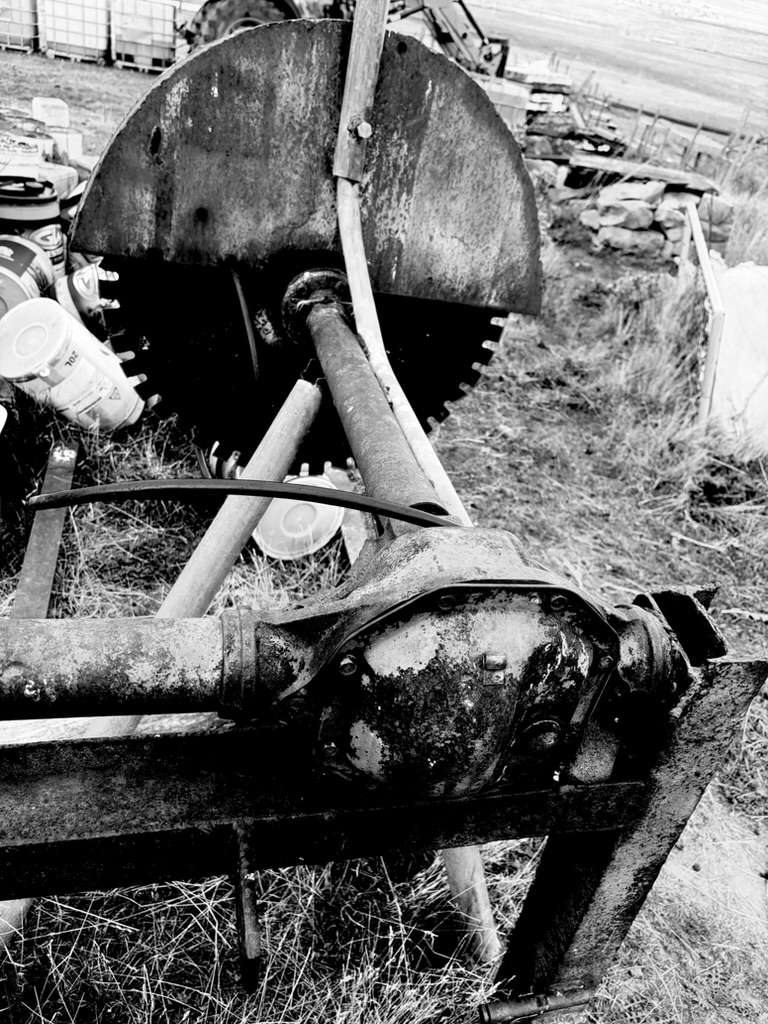
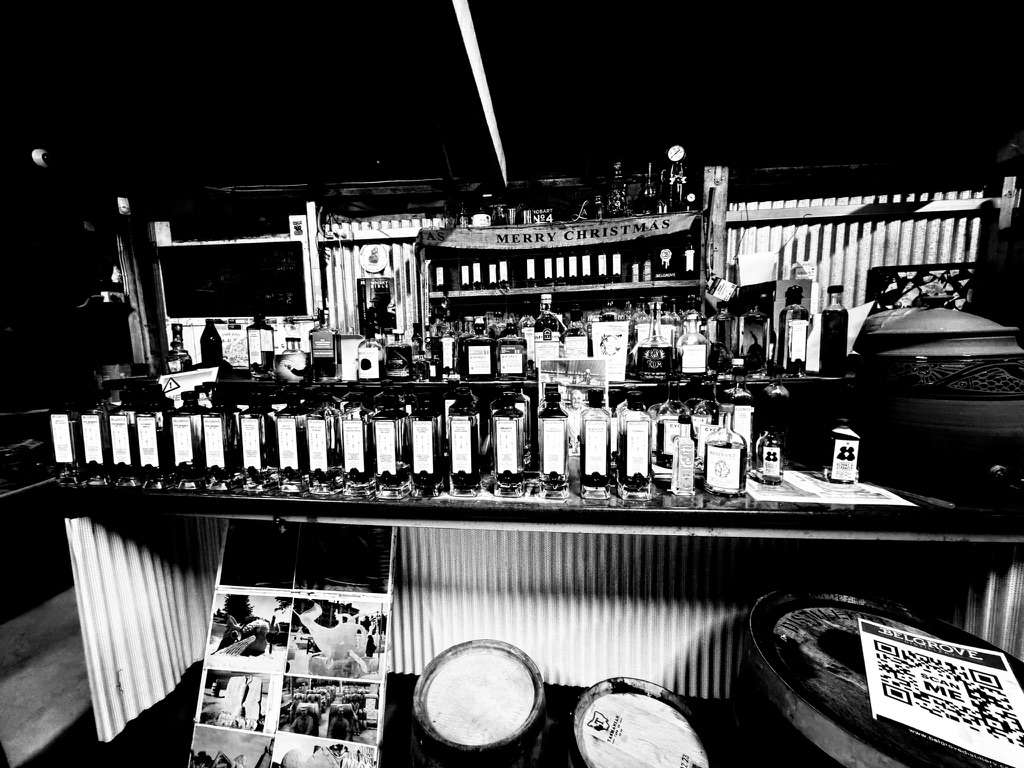
If Peter Bignell wasn’t making whisky on his farm, he’d be a set designer for the Mad Max movies, or building supercolliders out of WWII scrap. I’m so used to visiting distilleries with huge, shiny, and well-polished copper stills. If you’re expecting that and you wander onto Peter Bignell’s farm, past the beautiful stone house to the distillery out back, you’d be shocked. This is not a classically fashioned tourist distillery.
It’s entirely different.
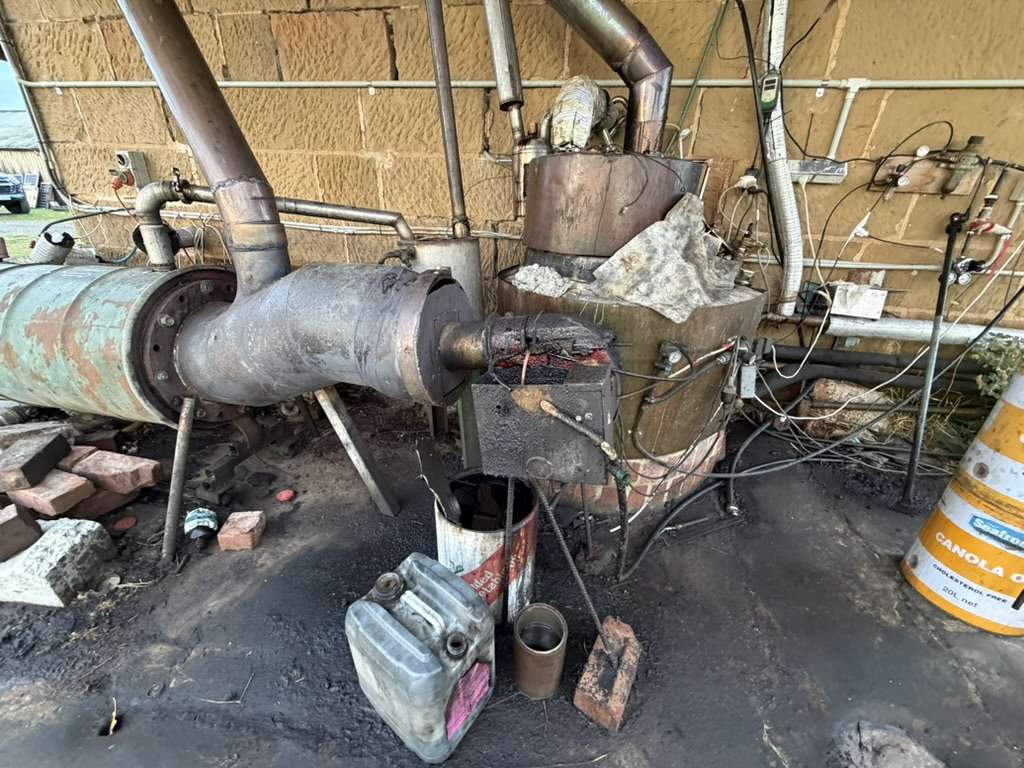
Peter is Dr. Frankenstein… MacGyver… He can make anything from anything. You need a new sub-atomic spur hydroxolator, and all you have is two used brake calipers and a box of old doorknobs. He’ll be at work in a welding helmet, whipping one up for you. A still uses a lot of energy to heat the mash to a boil to capture the spirit, and instead of your typical electric heating elements, Peter built a steam boiler from 50-gallon drums and stainless fittings that roars like a dragon. He picks up used cooking oil from the local chip shops to run it all, and can even run it on animal fat.
Apparently, he’s got the only biodiesel-powered still in Tasmania, and probably the planet. Maybe there is a distillery in a jungle somewhere with something similar, but I’d be surprised if it was built with as much “make-do” genius as everything on Peter’s farm.
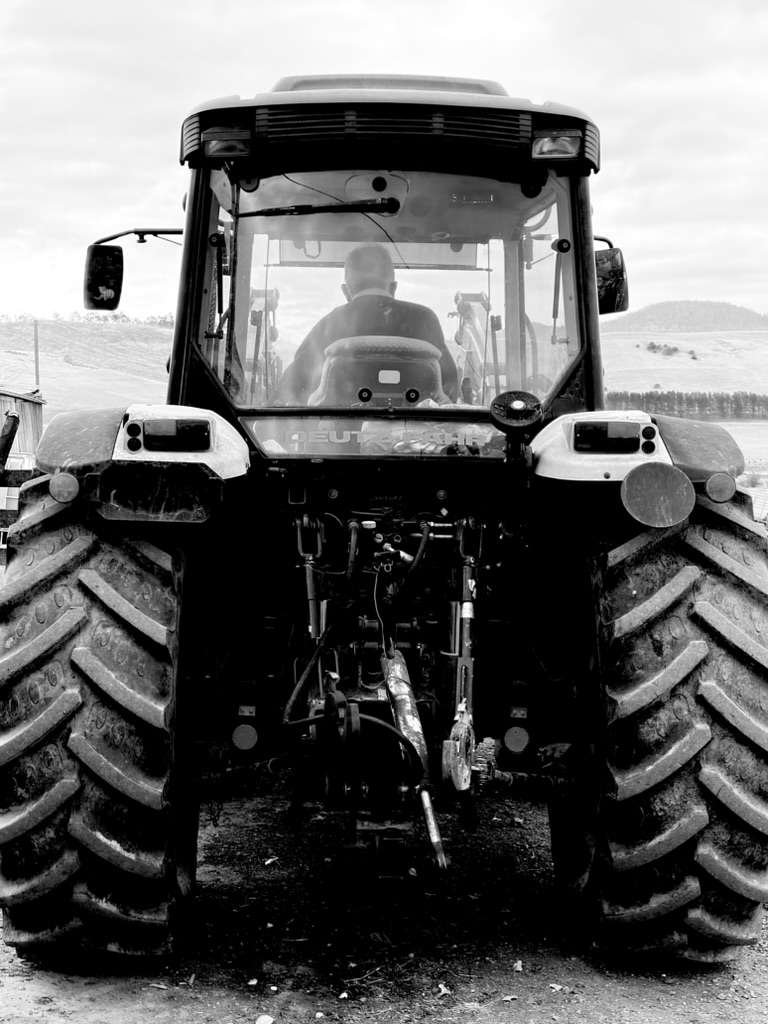
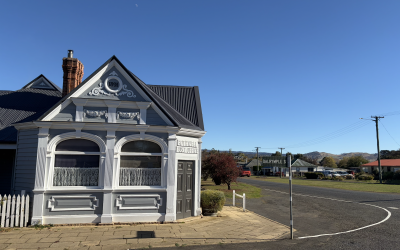
He’s the 6th generation of his family to farm in the Derwent Valley, just down the hill from the little town of Bothwell.
He’s a farmer first, he’ll tell you. An inventor by nature and a distiller by chance.
An old grain mill up the hill on the Clyde River needed repairs. There aren’t any college courses on repairing 200—year-old water-driven stone mills, and Peter was the only guy they could find who could figure out how to fix it and get it running.
So of course, he did.
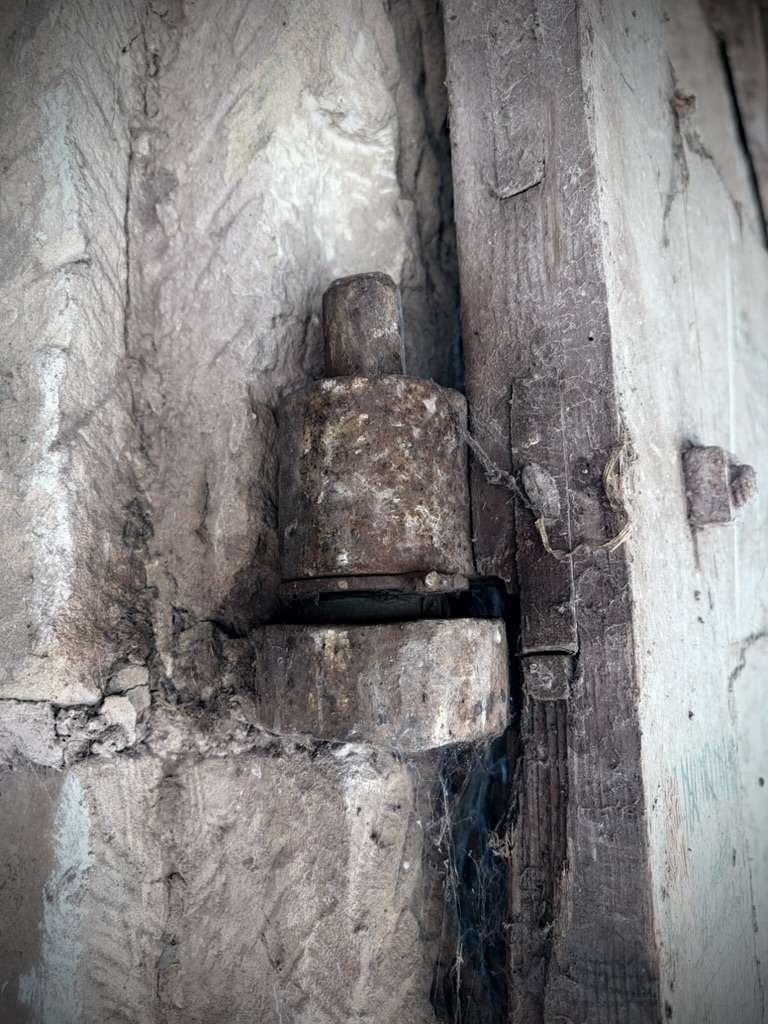
It involved cutting hundreds of hardwood teeth for the giant iron gears that had been cast in England two hundred years ago and had worked well all these years. And it might be surprising that those giant gears that turn from water power and use great stones to grind flour can’t be all iron. Half of them are iron, and the gears they turn against must be wood. Iron on Iron could cause sparks, and air thick with flour dust doesn’t mix well with them.
So Peter had to figure out how the whole thing worked, and he had to hand-cut the wood teeth to fill the great gear wheels. Hundreds of big, hardwood teeth that will someday wear out and need to be replaced by someone like Peter, if, in fact, there will be someone like Peter in a hundred years’ time.
And it was that experience, hanging around Clyde Mill Distillery, that gave him the bug to make whisky. Also, a bumper crop of rye and no market… “It rained at the right times, and I had a huge crop of rye and no market for it.”
So what to do? Build a still and use all that rye to make whisky.
Seems logical, but how does one go from being a farmer and occasional water wheel mechanic to making worldwide award-winning whisky? You have to be Peter, that’s how.
Some of us hate waste. I personally hate waste. There is only so much stuff to go around, and Peter views everything on our little planet as a limited resource.
Want to malt barley? It needs to be ripe and ready to start growing, so instead of making a traditional malting floor and raking it like a traditional distillery in Scotland, Peter got hold of a rusty industrial laundromat dryer and fixed a little sprinkler inside to spray the turning barley.
Want to peat smoke that malted barley? Poke a hole in the front door of the dryer and aim a pipe from his homemade smoker, burning a mix of locally sourced peat from his brother’s farm up the hill, and mix in some sheep dung, which, he explains, is much the same as peat. “Anaerobically broken-down organic matter, just like a peat bog, except with sheep, the bog walks.” Aim the smoker at the front of the dryer for a while, or all day and night, to take your peated barley whisky lightly peated or go full Bogan Burnout.
Bogan Burnout. He wanted to make a whisky that was so smoky and peaty that nobody could stand it, but it sold out. “I failed, people like it…”
The first barrels of Bogan Burnout sat in oak for around five years, and the time in oak mellowed the smoke to a level that found many fans. Enough fans to totally sell out. So, he made another batch. I had a sample from Bogan Burnout V2 straight from the cask, and yes, it was smoky. It’d only been in the oak a few months and had a lot of mellowing to do, but I could see a good future for the elixir. Maybe he’ll fail again, and it’ll sell out like the last batch.
The idea of smoking your grain with sheep shit is pretty crazy, but it’s not a new idea. Since the beginning of time, humans have found that the heat from the backs of farm animals burned well and kept us warm. Now with Peter, it smokes our whisky.
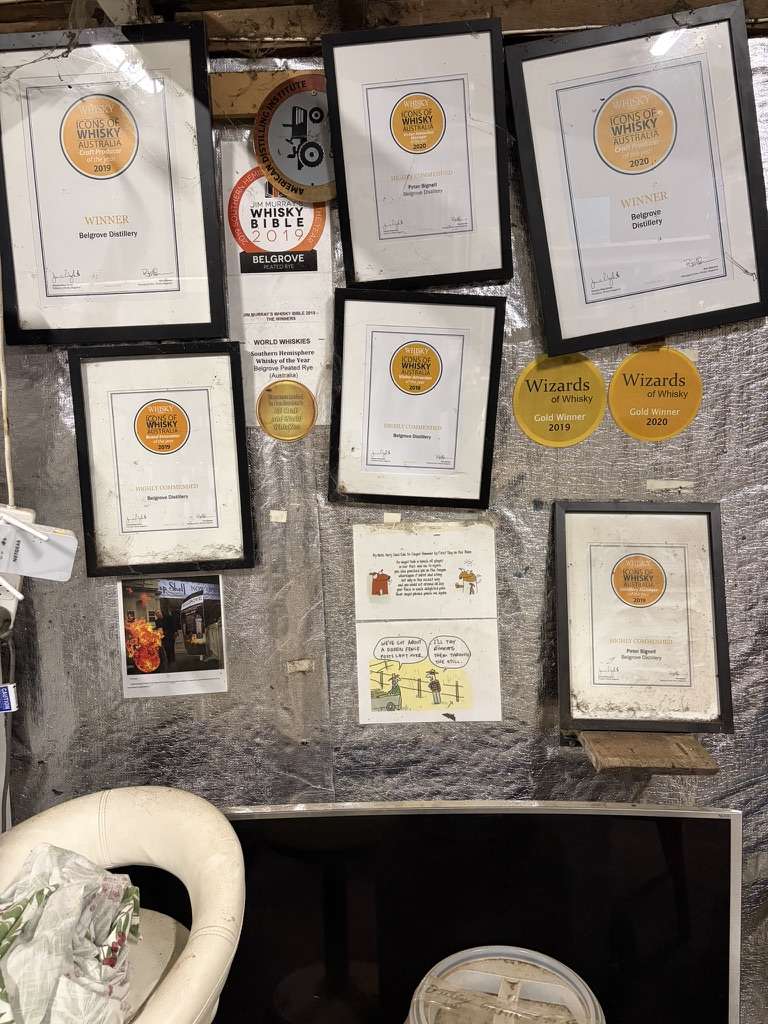
His methods pay off. He’s won dozens of awards for great whisky from competitions all over the world, taking top worldwide honors many times.
A vineyard makes a bad batch of wine? Peter will come get it and make Brandy, great Brandy by the way. No point in dumping all that wine down the drain, it can make a fine brandy.
He even had Gordon Ramsay shoot a TV episode here, complete with Gordon shoveling sheep shit.
There may be Gordon Ramsay shoveled sheep shit adding terroir to your bottle of Bogun Burnout.
Had it not been for a broken 200-year-old water wheel, Peter Bignell might just be happily raising sheep on his farm… Or building spaceships to Mars, probably both.
The whisky business attracts some wonderful people and makes for great stories. And I suspect that when Armageddon or The Zombie Apocalypse comes, Peter will be unaffected, making his whisky from his own grain in his own way, never having to slow down waiting for a part from somewhere far away. He’ll pull out his torch, make the part from scratch, and just keep going… Making something out of anything and bottling great whisky to soothe those of us left after the End Times are upon us.
Thanks, Peter, for doing things your way. And when those pesky end times do come, I’ll move next door, so I’ll have access to warm wool, lamb shanks, and very tasty whisky while the rest of the planet is cold, hungry, and thirsty.