1. Before you owned a distillery, what did you imagine owning one would be like—and how wrong were you?
I had a very romantic image of owning and running a distillery. The set-up was the least romantic part: finding a tin shed to rent, working out what supporting equipment (pumps/hoses) was needed, safety regulations, licensing, etc. However, once I was up and running, the romanticism started to shine. Choosing a mash bill, yeast and selecting casks; getting to know the best way to mash, ferment, distill – that was the fun, albeit challenging part.
2. Was there one moment when you realized, “Holy shit, I actually own a distillery”?
The first time I thought that was Christmas Eve 2017, when Santa Burns (Mark Burns who made most of my equipment) delivered and set up the still. It was so elegant, shiny and big that I thought I was in heaven. Mark then drove 700 km to get home in the early hours of Christmas morning – a real Aussie Hero. The next time wasn’t until after my first release, when it all sunk in that I had produced a not too bad whisky that people wanted to buy. I still sit down and watch the still in action and pinch myself at owning a distillery.
3. What has been the hardest part of this business that nobody warned you about?
That’s an easy one. Chasing up people to pay their invoices. Selling is always the hardest part, but we now have a good following. Like farmers and other producers, we’re at the bottom of the pile when it comes to getting paid in a reasonable timeframe.
4. Was there ever a day when you seriously considered walking away? What kept you here?
Not once. As a one-person distillery, I can’t even complain about my boss! What keeps me here is the fact that I get to sit down with fellow whisky enthusiasts and share my whisky, share stories with them, and make lifelong friends. At the same time, I get to dictate the direction I want to take whisky production. That’s not to say I don’t have bad days, I certainly have times when things go wrong and I get frustrated, but, overall, I wouldn’t change this for the world.
5. What’s one decision you made that everyone questioned at the time—but you’d make again tomorrow?
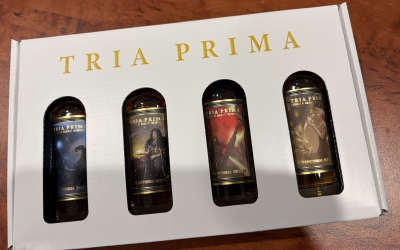
The decision to not blend different cask types. Our philosophy was always to highlight the characteristics that different cask types have on new make spirit. We have a range based solely on cask type. However, we will be doing a blended whisky in the future, so I can get the opportunity to blend different casks to create something unique.
6. Who inside this distillery deserves more credit than they get?
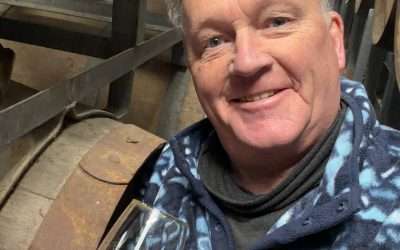
As there is only one person in the distillery, that must be me! However, to be honest, it must be my wife (co-Director). She has given me more freedom than I deserve and put up with me coming home late, driving me to and from tastings and supporting my dream, despite not drinking alcohol herself.
7. What part of this place are you most protective of—the thing you would never change just to sell more bottles?
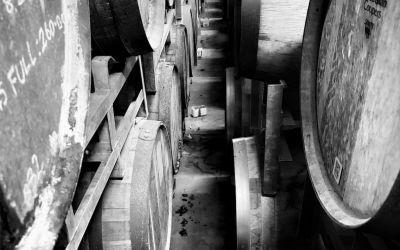
Our choice of casks. Our emphasis has always been on selecting the best casks available. An average cask produces an average whisky at best. We were lucky to have had a cooperage in Adelaide that selected the best casks locally and worldwide. This was at a time when we still had access to exceptional casks – some are now impossible to find. Give the quality of your spirit the quality of the cask it deserves.
8. If I sat at this bar with your employees after you’d gone home, what would they tell me about you?
They would say that I am the most intelligent, witty, handsome person they’d ever met. Don’t check this against Question 6!
9. Someday this distillery will belong to somebody else. What do you hope they never change?
We have no secrets at Tria Prima and we love to share. I hope that philosophy lingers on. In terms of production, we do everything slowly. A distiller in Scotland once told me that best whiskies from Scotland were produced during the last whisky glut. Back then, he said, “we had all the time in the world, slow fermentations and slow distillations”. Don’t speed up the process and spoil your whisky. Perhaps we took that to an extreme: we spend a whole day on our middle cut – slow distillation gave us a better separation of the good from the bad and the ugly, more reflux – and a beautiful clean spirit. Don’t rush.
10. Last call. You’re not the owner anymore. You’re just another person sitting at the bar. What are you drinking?
Ideally, I’m back in that pub in Dollar in Fife, drinking a 1938, 45 yo Mortlach for ten bucks; or an early ‘80’s 18 yo Macallan. Dreams aside, give me an elegant ex-bourbon Speyside with delicate fruity and floral notes or a big, bold sherried cask (Glendronach, Tobermory 15 yo), an old Yoichi, or an Old Pulteney oloroso cask – not so common, but out of this world.